
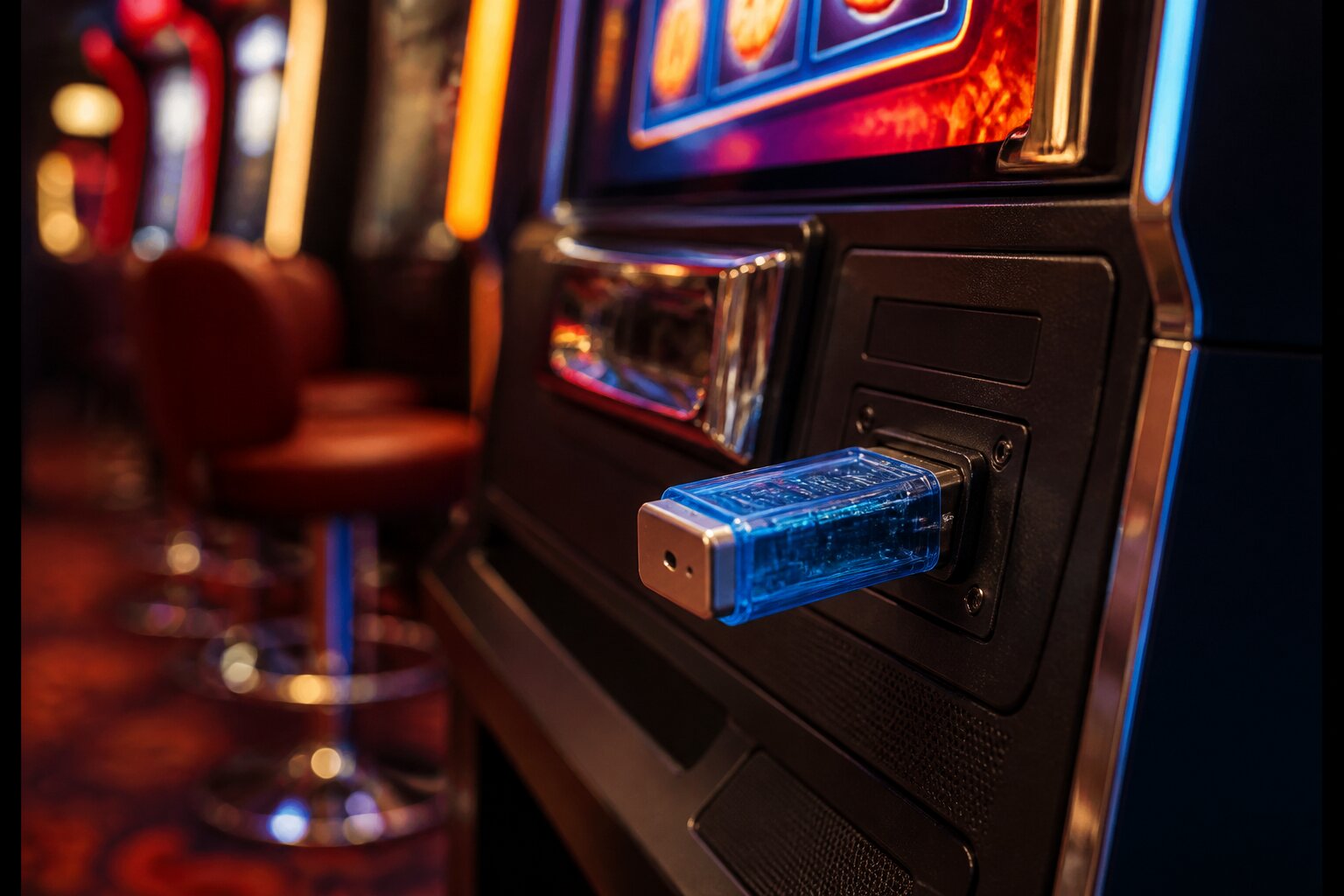
Ever wondered how your local pub’s fruit machine keeps running smoothly, handing out winnings one minute and flashing lights and sounds the next? Behind the familiar reels and buttons is a clever piece of kit that’s crucial for day-to-day operation. Tucked away out of sight, the fruit machine dongle is something most players never spot, but it quietly plays a vital role in how these machines work.
If you’ve pictured a small gadget that plugs into computers, you’re on the right lines. In a fruit machine, this device does far more than simply connect hardware; it provides security and control that protect both the operator and the players. To make it all click, the next section explains exactly what the dongle is and where it sits inside the machine.
What Is a Fruit Machine Dongle?
A fruit machine dongle is a small, physical device that plugs into a slot inside a land-based fruit machine, such as those found in pubs or amusement arcades. It acts as a security key, allowing the machine to run authorised software and enabling certain games or features.
Dongles often take the form of a USB security key or an EPROM-style module. Some resemble a memory stick, while others are compact circuit boards that fit into internal connectors. Whichever shape they take, the device contains encryption and unique identification codes tied to a particular machine or software version.
The main purpose is to prevent unauthorised use or tampering. Without the correct dongle, a machine may refuse to operate, or it may restrict access to maintenance menus and game options. This control helps operators maintain compliant settings and prevents unapproved software from being installed. The next section describes how that protective role is carried out in practice inside the cabinet.
How Does a Fruit Machine Dongle Operate?
Inside a fruit machine, the dongle is much more than a plug-in accessory. It acts as a gatekeeper between the machine’s hardware and its game software, verifying authorisation before any game can run or sensitive settings can be changed.
Security Functions of the Dongle
When the machine powers up, its software performs a check to see whether the correct dongle is present. If the dongle fails verification, the machine will lock out gameplay and display a service or error message. This prevents unauthorised software installs and blocks attempts to alter payout configurations.
Dongles contain encrypted codes that correspond to the machine’s software, making them hard to duplicate. That encrypted handshake ensures only properly issued keys allow full operation, which protects the operator’s asset and the integrity of the games offered.
Role in Machine Activation and Maintenance
Technicians use authorised dongles to unlock deeper system menus required for setup, updates and servicing. For instance, a dongle is commonly needed to open maintenance menus, apply certified software updates or adjust operational parameters within permitted bounds.
Access is deliberately restricted: only people with an authorised key can change settings such as stake ranges or view compliance logs. This layered access model reduces the risk of accidental or malicious changes and supports the operator’s ability to manage machines responsibly. The example that follows shows how this works during a typical installation and service visit.
Example: Using a Dongle With a Fruit Machine
Picture a technician arriving to install a new fruit machine at a pub. The machine comes preloaded with approved software, but it will only enter operational mode once the correct security dongle is presented.
The technician unlocks the cabinet and locates the internal port designed for the dongle. They insert the authorised security key and power up the machine. The system immediately checks the key’s encrypted codes; when they match, the machine completes its boot sequence and enables the service buttons.
With access granted, the technician navigates the maintenance menus to confirm software versions, apply a sanctioned update and check payout settings against regulatory requirements. The dongle’s presence ensures that any changes are authenticated and logged by the machine’s system.
After maintenance is finished, the technician removes the dongle and secures the cabinet. From that point the machine operates normally for players, but will refuse to run or allow restricted changes if the correct dongle is absent. The next section looks at why that control matters for owners and operators.
Why Are Dongles Important for Fruit Machine Owners?
Dongles are central to lawful and secure operation. They ensure machines run only approved software and prevent unauthorised alterations that could compromise compliance with regulatory standards. For an owner, that reduces legal and financial risk.
Beyond compliance, dongles act as a practical control over who can perform technical work. By limiting access to maintenance menus, they help owners delegate servicing to trusted technicians while keeping the machine’s core settings protected. This arrangement simplifies audits and supports accurate record-keeping because changes are tied to authorised activity.
Security is also a day-to-day benefit. Dongles make it difficult for third parties to install unofficial software or manipulate machine behaviour, which helps protect takings and the operator’s investment. With those protections in place, owners can focus on running their business; the following section clears up common misunderstandings about dongles so operators and technicians know what to expect.
Common Myths About Fruit Machine Dongles
Below are frequent misconceptions and the facts that address them.
-
Dongles can increase payout rates: False. Payout configurations are defined in the approved game software and set within regulatory limits; a dongle merely permits authorised operation, it does not alter payout mechanics.
-
Having a dongle lets you cheat the machine: Incorrect. Dongles are designed to prevent unauthorised access and protect the machine’s approved configuration rather than enable manipulation.
-
Fruit machine dongles include specialised security chips and encrypted codes; standard USB drives will not be recognised by the machine.
-
Dongles store player data or personal information: Wrong. Dongles are not used for capturing or holding player details; their role is authentication and authorisation between the machine and its software.
-
Missing or damaged dongles are easily replaced: Misleading. Each dongle is specific to a machine or software release and must be issued or replaced through authorised channels, following the manufacturer’s procedures.
These clarifications should help operators and technicians separate fact from fiction and set realistic expectations about what a dongle does and does not do.
Final statement: A fruit machine dongle is a compact but critical component that keeps machines secure, compliant and manageable; understanding its role helps owners, technicians and regulators work together to keep these devices functioning correctly.
Discover Online Slots at Online Bingo
We would be delighted to welcome you to our site, where you can enjoy playing online slots with us at your leisure. Our aim is to provide a friendly, enjoyable experience every time you visit.
Getting started is straightforward: simply create an account, make a deposit and you can begin playing. We look forward to seeing you at Online Bingo.
**The information provided in this blog is intended for educational purposes and should not be construed as betting advice or a guarantee of success. Always gamble responsibly.