
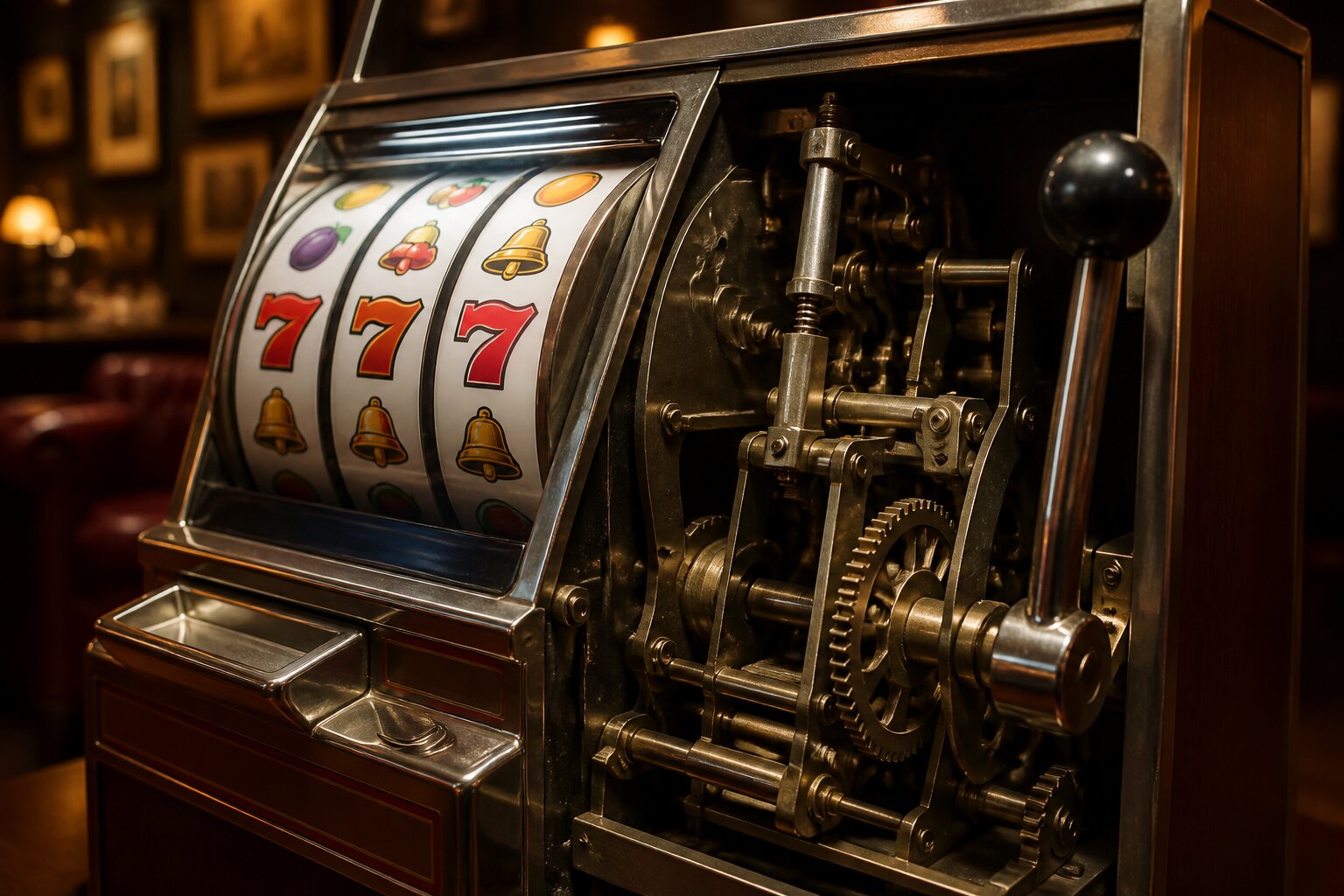
Ever stood in front of a classic slot machine and wondered what’s ticking away inside? You’re not alone. Mechanical slots have been captivating players for well over a century, yet their inner workings remain a bit of a mystery to most.
If you’ve ever pulled the lever and watched those spinning reels with curiosity, get ready to unravel the secrets behind this timeless favourite. From hidden gears and springs to precise stoppers, there’s a fascinating world beneath those lights that explains how each spin finishes where it does.
Curious to find out what really happens when you spin? Keep reading to peek behind the curtain and discover how these iconic machines operate.
What Are Mechanical Slot Machines?
Mechanical slot machines are the traditional gaming devices once common in casinos and amusement arcades. Unlike modern digital machines, they use physical reels, usually metal cylinders, which rotate when the player pulls a lever.
Each reel carries different symbols. Springs, gears and stoppers make those reels spin and halt; there is no computer running the game. Payouts are decided by which symbols fall on the payline when the reels stop, and coins are released if the combination matches the paytable fixed inside the machine.
These machines depend on mechanical processes rather than software. Each spin is independent and governed by the machine’s physical setup, a design that emphasises clear, observable mechanics over electronic randomness.
Key Components Inside a Mechanical Slot Machine
Inside a mechanical slot machine several parts must work together for the game to function.
Reels are the spinning cylinders that show symbols; most classic machines have three reels mounted on individual shafts. The lever is the player control that starts the sequence, releasing tension in an internal spring to set the reels turning. The spring mechanism supplies the energy that makes the reels rotate.
Stoppers, or pawls, interact with notched discs on each reel to determine where a reel halts. A system of gears and brakes regulates reel speed so the stoppers can engage reliably. The payout mechanism is a network of levers and trays that checks for winning alignments and releases coins when a valid combination appears. A coin detector prevents tampering by verifying inserted currency before play is allowed.
All these elements are calibrated together so the machine runs smoothly and outcomes are determined by the interplay of moving parts rather than outside interference.
How Does the Reel Mechanism Operate?
Pulling the lever sets off a chain of mechanical events inside the cabinet. The lever releases the spring’s stored tension, which transfers energy into the reels and causes them to spin. As they rotate, gears and frictional brakes slow the reels down at slightly different rates.
Each reel has a notched disc and a stopper arm. When the reel slows enough, the stopper drops into a notch and locks the reel in place. The final alignment of symbols on the visible payline is therefore a product of where those stoppers engage as the reels decelerate.
Because the movement is governed by the machine’s physical timing and the interaction of parts, neither skill nor timing by the player changes the outcome. The mechanism is designed so each spin stands alone; previous results do not affect what happens next.
What Role Does the Randomness Mechanism Play?
Randomness is central to how mechanical slot machines behave. Rather than relying on software, these machines use mechanical unpredictability created by the combination of springs, gears, and stoppers.
When the spring releases, tiny variations in tension, friction and the exact moment each stopper engages create an outcome that cannot be predicted from outside the machine. That built-in unpredictability is the practical equivalent of randomness for mechanical designs.
Regulations require operators to ensure games meet fairness standards, so machines are maintained and inspected to make sure their mechanical behaviour remains within expected tolerances. This gives players confidence that the outcomes are not manipulated.
The Function of Levers, Springs, and Stoppers
The lever starts the process by freeing the spring. The spring’s motion accelerates the reels, and the gear and brake system then controls the deceleration. Stoppers fall into notches as reels slow, locking their final positions and defining the visible symbol alignment.
Because the parts interact in a physical, variable way, there is no reliable method to influence or predict where the stoppers will catch. That unpredictability is the practical source of fair outcomes in a mechanical machine.
How Are Payouts Determined in Mechanical Slot Machines?
Payouts are determined by the symbol arrangement that appears on the payline when the reels stop. The machine uses mechanical detectors to read the exact positions of the reels and compare them to the built-in paytable.
If the arrangement matches a winning combination, the payout mechanism is triggered and a set number of coins is released into the tray. The amount corresponds to the fixed values printed on the paytable inside the cabinet, so the payout structure is transparent and consistent.
Because outcomes are governed by the machine’s mechanical design and each spin is independent, the pattern of wins and losses cannot be predicted from previous play. If you are unsure about how payouts are displayed, checking the internal paytable gives a clear reference for what each combination pays.
Are Mechanical Slot Machines Still in Use Today?
Fully mechanical slot machines are now uncommon in mainstream gaming venues. Most operators have shifted to electronic and digital machines, which offer several practical advantages:
- easier maintenance and parts replacement compared with ageing mechanical components
- more flexible game designs that can be updated or themed without replacing hardware
- enhanced compliance features that support audit trails, player protection and certification
That said, mechanical machines survive in niche settings such as private collections, museums or themed arcades where they are kept for historical interest. In these locations they are appreciated for their craftsmanship and as teaching pieces about the origins of modern gaming technology.
In live venues their role is usually decorative rather than central to a gaming floor. You will sometimes see them used to add atmosphere or as display pieces, but they rarely form part of the regulated, revenue-generating machine inventory.
Regulatory frameworks prioritise player protection and transparent operation, and modern machines make it simpler to provide those safeguards. Electronic systems enable clearer records, easier testing and certified random number generation, which helps operators meet regulatory requirements.
Mechanical machines remain important historically, illustrating how gaming technology has evolved from simple mechanical mechanisms to complex, regulated electronic systems. They are valued for their heritage rather than as practical options for contemporary regulated gambling environments.
Common Myths About Mechanical Slot Machines Explained
Mechanical slot machines attract myths because their visible moving parts invite speculation. Here are some common misunderstandings, explained clearly.
Myth 1: Timing your pull can influence the outcome. In reality, the mechanism’s internal timing decides when stoppers engage. External timing does not affect where the reels stop.
Myth 2: A machine can be “due” to pay out after a long dry spell. These machines do not track past spins in a way that changes future results; each spin is independent.
Myth 3: Machines can be tricked by external methods. Regulated machines are protected by secure construction and regular checks to prevent tampering.
Understanding these points helps set realistic expectations about how mechanical slots function. If you play, treat it as entertainment and be mindful of your limits. Support and advice services exist for anyone who feels their play is becoming a problem.
This overview brings together the key mechanical principles that make classic slot machines work, showing how physical parts combine to produce each spin and payout. Whether you encounter one on display or find a vintage machine in operation, you can now recognise the engineering behind its motion and outcomes.
**The information provided in this blog is intended for educational purposes and should not be construed as betting advice or a guarantee of success. Always gamble responsibly.