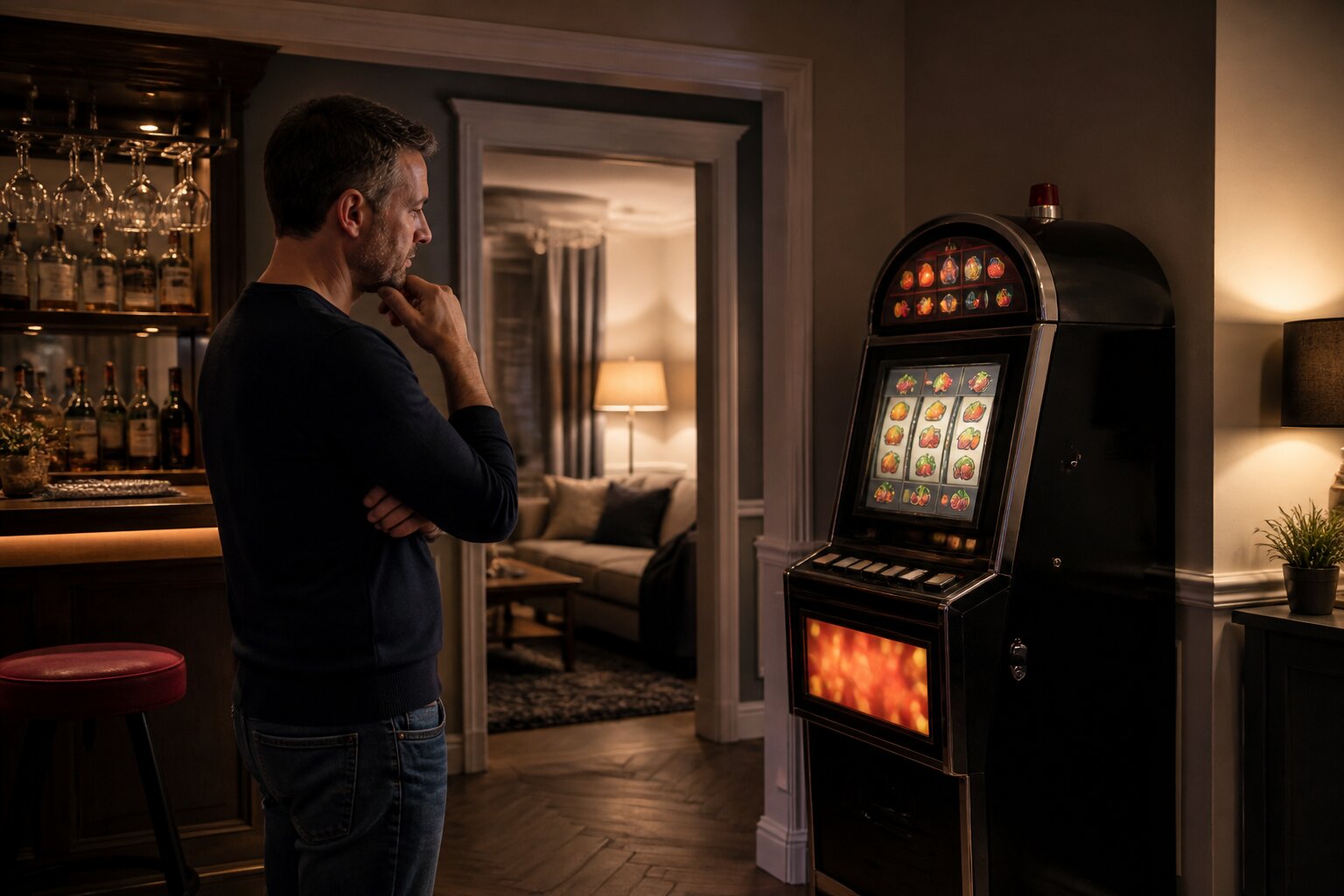
Ever fancied having your very own slot and fruit machines tucked away in the corner of your living room—just like the ones in the pub? You’re definitely not alone. With their flashing lights and catchy sounds, slot and fruit machines have a particular appeal and many people consider bringing one into their home for a touch of retro fun.
Before you buy or inherit one, it’s important to know what the law allows. UK gambling legislation sets out clear rules about ownership, use, age limits and when a machine moves from being a private novelty to regulated gambling equipment. Getting this right avoids legal trouble and ensures any machines in private hands are used appropriately.
Read on to see which machines count as gambling devices, what you can and cannot do in a home setting, and the practical steps to buy, sell and move machines lawfully.
Understanding Slot and Fruit Machines: What Counts?
Slot machines and fruit machines are treated as gaming machines when money is staked in return for a possible monetary reward or redeemable prize. That classification covers traditional pub-style “fruities” with mechanical or simulated reels, modern digital slots with bonus rounds, and compact units designed for home use if they accept stakes that could lead to a cash or prize payout.
Not every arcade-style game falls into this category. Devices that only issue tickets, display scores, or offer play purely for amusement without a monetary or redeemable prize are typically outside gambling regulation. Likewise, quiz machines or novelty toy-grabbers are usually treated differently because there is no stake-for-cash element.
A useful way to judge a machine is to consider how it pays out: if something of monetary value can be won or redeemed, the machine will usually be treated as a gaming machine under UK law. That distinction is central to everything that follows and determines whether further rules apply. Next, we’ll look at what the law says about owning these machines at home.
Home Ownership of Slot Machines: What Does the Law Say?
Private individuals are allowed to own slot and fruit machines for personal use at home, but strict conditions apply. The Gambling Act 2005 classifies these machines and sets the boundaries for lawful ownership. Key points are that the machine must remain in a private residence, must not be accessible to the general public, and must not be used to generate profit or run as a business.
Ownership requirements include:
- The machine must not be offered to the public for play.
- No fee or charge may be applied to allow others to use it.
- The device must not be employed in organised gambling.
If a machine is placed where the public can play or is used to make money—such as in a shop, shared premises, a workplace, or on the basis of admission—that activity becomes regulated and licences are required. The next section explains the age rules that apply to private ownership, which are especially important to bear in mind.
Age Restrictions and Who Can Own a Fruit Machine?
Only adults aged 18 and over may own or use a slot or fruit machine for gambling purposes. This age limit is absolute: under-18s cannot legally play or possess a gambling machine, even in a private setting and even if the machine pays out tokens or small prizes. Owners are legally responsible for keeping machines out of reach of minors and for preventing any underage use.
Failure to protect children from access can lead to prosecution and other penalties. The strictness of these rules reflects a broader policy to keep gambling an adult-only activity, and ownership carries the duty to enforce that boundary at home. With age restrictions clear, it becomes crucial to know whether any licences are required in other circumstances, which we cover next.
What Licences or Permits Are Required?
If a machine is kept strictly for private, in-home use by adults, no licence or permit from the regulator is required. Licences become necessary when a machine is made available to the public or used in the course of a business. Pubs, arcades, betting shops and similar venues must hold the appropriate permissions before offering gaming machines to customers.
Should the situation change—for example, if a machine is placed where others can access it even temporarily—the correct permits must be obtained from the local licensing authority. Operating a machine in a public or commercial setting without the required permissions is a criminal offence under the Gambling Act 2005 and carries serious penalties. The next section explains how the law distinguishes private use from public use in more practical terms.
Private Use vs. Public Use: Key Distinctions
Private use means the machine remains within your home and is accessible only to the owner or household members for non-commercial entertainment. That includes occasional spins by family members where no money, prizes or fees change hands. Public use occurs when the machine is made available beyond the household—such as in a community hall, workplace, shop, or at social events where others are invited to pay or win prizes.
The distinction matters because public use triggers regulatory requirements and can convert what seemed like a hobby into an unlicensed gambling operation. Examples that move activity into the public sphere include charging entry for an event that features a machine, allowing neighbours or club members to play for cash, or placing the unit in a shared building where a wider group can access it. Keep the machine at home, limit access to adults in your household, and avoid any scheme that could be interpreted as commercial to remain on the right side of the law.
Understanding those boundaries helps explain the consequences of crossing them, which are both legal and practical. The next section sets out what penalties can follow illegal possession or misuse.
Penalties and Consequences for Illegal Possession
Breaching the rules around slot and fruit machines can lead to significant penalties. Running an unlicensed machine in a public or commercial setting can result in prosecution, substantial fines and the confiscation of equipment. In severe cases, those responsible may face imprisonment. Authorities can seize and destroy machines used unlawfully, and prosecution can carry additional costs and restrictions that affect future ability to hold licences.
Penalties also apply if under-18s are allowed to use gaming machines. Where private ownership strays into charging others, hosting gambling activities, or otherwise operating as a business, legal consequences similar to those for commercial operators will follow. Given the seriousness of enforcement, careful compliance and sensible record-keeping are prudent steps for any owner. After covering risks, the following section looks at how to buy, sell and move machines without falling foul of the rules.
Buying, Selling and Transporting Machines Legally
Buying, selling and transporting slot and fruit machines for private use is lawful if carried out responsibly. Sellers should ensure buyers are adults and buyers should confirm that the intended use is private. Keeping a record of the sale, including proof of age and a simple receipt, provides useful evidence of lawful intentions should questions arise later.
Transporting a machine between private addresses does not usually require special permits, but care must be taken to ensure it is not temporarily placed somewhere where the public could use it. If transporting on behalf of another party, both parties should meet age requirements and the recipient’s intended use must be private. Commercial transfers, deliveries to licensed premises, or moves intended for public use are subject to stricter rules and documentation.
Can You Buy or Sell a Slot Machine Privately?
Private sales through online marketplaces or direct transactions are permitted so long as both parties are adults and the machine will remain for private use. Sellers should avoid transactions intended for commercial supply and both buyer and seller should retain evidence of the sale and the buyer’s age.
Rules for Moving Machines Between Locations
When moving a machine to a private home there is normally no need for permits, but owners must prevent access by the public during transit and at the destination. For moves involving licensed premises or commercial use, relevant licences and documentation are required and different rules apply.
With the practicalities of purchase, sale and transport explained, the final section draws together the main legal points so you can decide whether owning a machine at home is right for you.
The Bottom Line: Know the Law Before Bringing a Slot Machine Home
An A slot or fruit machine can be an interesting addition to a private home, provided it is used in line with the law. Private ownership by adults does not require a licence, but strict limits apply: machines must stay in a private residence, must not be made available to the public, and must never be used by anyone under 18. Selling or transferring machines should include age verification and a record of the transaction.
Breaching these rules risks prosecution, fines and seizure of the equipment, so owners should act cautiously and keep straightforward documentation to demonstrate lawful use. For definitive guidance, consult the Gambling Commission or your local licensing authority, or seek professional legal advice before acquiring a machine. Owning a machine can be perfectly lawful and enjoyable when done with a clear understanding of the responsibilities involved.
**The information provided in this blog is intended for educational purposes and should not be construed as betting advice or a guarantee of success. Always gamble responsibly.