
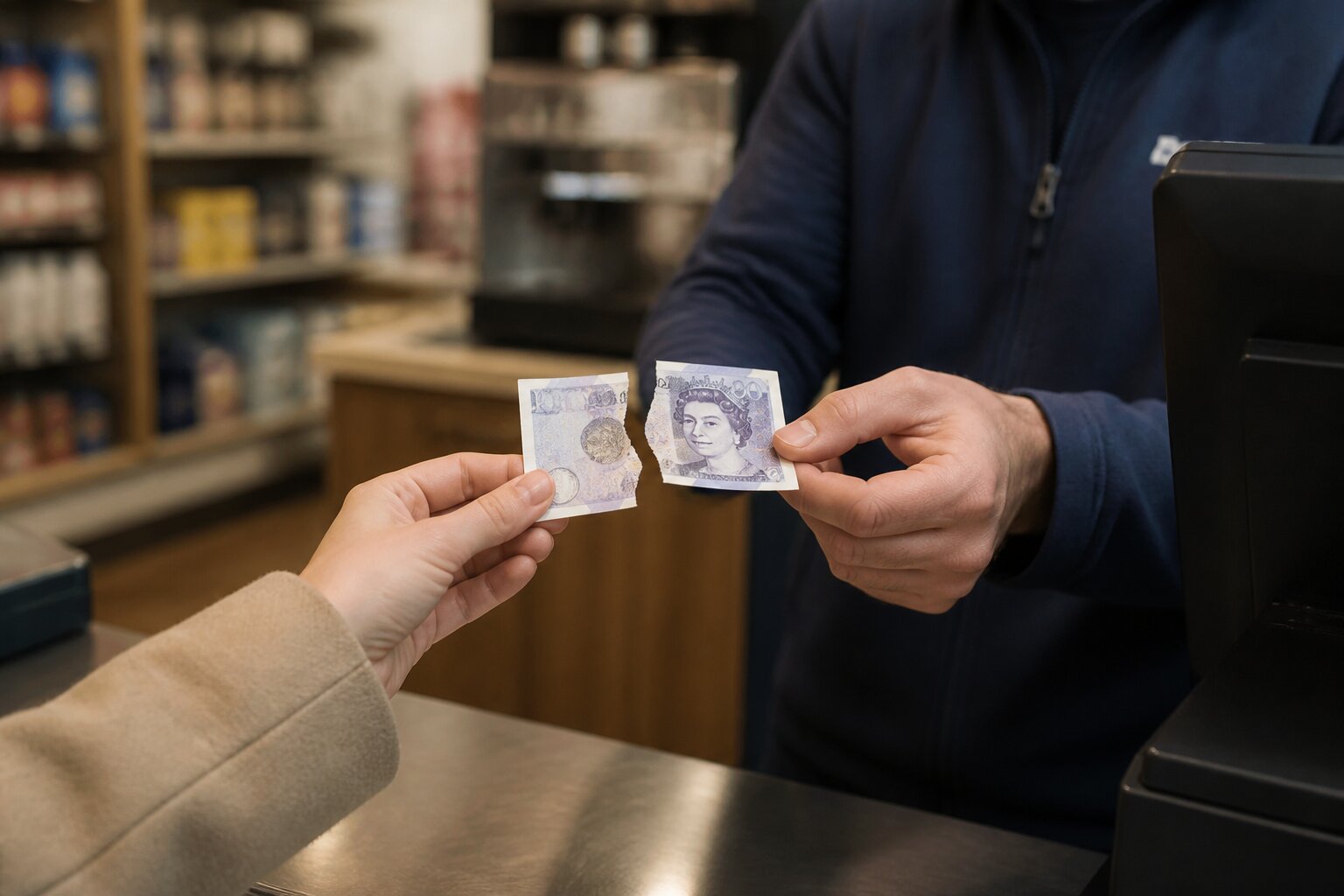
Ever found yourself at the till, fishing out a note that’s seen better days, and wondered if the shop will take it? You’re not alone. Many of us have faced that awkward moment when a cashier studies a torn tenner and gives you “the look”.
Damaged cash can be a real headache, whether you're buying a pint of milk or doing a bigger shop. Shops and shoppers often don’t know what the actual rules are, which causes confusion and sometimes embarrassment. Read on to find out where you stand with ripped notes and what to do if you’re handed one in change.
Why Do People Try to Use Ripped Notes in Shops?
People end up offering ripped notes at the counter for everyday reasons. Most damage is accidental: notes get caught in zips, torn in wallets, creased, or simply overlooked until payment time. Often the moment of discovery comes when someone realises the only cash they have left is a damaged fiver and they need to buy something small.
Children and teenagers also play a part—birthday notes tucked into cards can be handled roughly, and the damage only shows when they try to spend them at a local shop. In other cases, a note handed over as change earlier in the day might carry a tear that the recipient doesn’t notice until later.
Mostly, offering a ripped note is a practical choice rather than anything deliberate. That everyday context helps explain why shop staff and customers both feel unsure in these moments. Next, we’ll look at how shop staff view those situations and the practical concerns that shape their decisions.
Understanding the Shopkeeper’s Perspective
When a customer presents a damaged note, shopkeepers weigh several practical factors. Their main concern is whether the note will be accepted when they deposit takings at their bank. Notes torn almost in half or with large missing sections are risky because banks may refuse to exchange them.
Shop training and internal policies also matter. Some businesses instruct staff to accept notes as long as the serial number and key security features are intact, which means a small tear or worn corner might be fine. Other shops take a stricter line, refusing any note with significant damage to avoid the risk of being unable to bank it.
Staff decisions balance customer service with protecting the business, so a polite refusal is usually about minimising risk rather than suspicion. Understanding that practical stance makes the next section on legal obligations clearer.
Are Shops Legally Required to Accept Ripped Notes?
Retailers in the UK are not legally required to accept damaged banknotes. Under current law and Bank of England guidance, businesses may refuse any note they judge not fit for payment, whether worn, torn, or heavily marked. Accepting damaged notes is a matter of discretion rather than a legal duty.
This means a shop can decline a note that appears unreliable for banking purposes, such as one nearly torn in two. Shops set their own reasonable policies, provided those rules do not contravene anti-discrimination or trading standards. With that legal backdrop in mind, it helps to know what condition a note should be in to be broadly acceptable.
What Condition Must a Note Be In to Be Legal Tender?
A banknote offered to settle a debt should clearly display its security features and identifiable details. While "legal tender" relates to settling debts, shops and banks expect notes to be sufficiently intact to check authenticity. Damaged or soiled notes that hide security features can cause hesitation at the tender point.
Bank of England Guidelines for Damaged Notes
The Bank of England sets practical criteria for exchanging damaged notes. A note is generally exchangeable if:
- More than half of the note is present, including at least one complete serial number
- All key security features are visible, such as holograms, see-through windows, and metallic strips
- The note has not been defaced in a way that hides these features
- Polymer notes have not been laminated or altered so their original state is obscured
Notes with a missing corner or a small tear that leave security features readable are typical examples the Bank will usually exchange.
What Constitutes “Unfit” Currency?
A note is classed as "unfit" when it no longer meets the minimum quality for circulation. That includes notes:
- Torn or missing large pieces, or cut in half
- Heavily soiled, stained, or contaminated so the print is obscured
- Badly creased or limp so key features are unclear
- Marked with ink or substances that prevent verification
A note smudged with ink so the security window cannot be seen, or one with a large section missing, is unlikely to be accepted at the till or exchanged without special handling. The next section explains what happens if a shop refuses a ripped note.
What Happens If a Shop Refuses a Ripped Note?
If a shop decides not to accept a ripped note, the sale cannot proceed using that particular piece of cash. Most shops will ask for an alternative payment method — another note, coins, or a card — and will refuse damaged notes as part of their duty to protect takings from being rejected by banks.
There is no statutory dispute process that forces a retailer to accept a damaged note, so the decision stands unless the business chooses otherwise. Staying calm and offering another payment method keeps the exchange respectful and avoids confrontation.
Understanding how refusals play out in real life helps make the next section about actual cases more relatable.
Real-Life Examples of Ripped Note Acceptance in the UK
Shops around the UK offer a range of responses depending on the damage and store policy. These real examples show how principles translate into practice, so you can better gauge what might happen at the checkout. Local staff often use a mix of visual checks and store rules to decide, and outcomes can vary even between branches of the same retailer.
Accepted Without Issue
A newsagent accepted a £5 with a small edge tear after checking serial numbers and security features, concluding the note was still recognisable and acceptable for banking. The cashier explained that as long as identifying details were clear and the note was not missing a significant portion it could be used or deposited without problem. Similarly, a café took a polymer £10 with a slightly dog-eared corner once the cashier verified the security strip remained intact.
In both cases, the damage was minor enough to pass a quick authenticity check. Staff in these situations tended to be pragmatic, prioritising whether the note could be confidently identified and handled by their tills and by banks afterward.
Refused at the Register
A convenience store refused a £20 torn nearly in half because part of a serial number was missing, and their policy barred notes with significant tears. The member of staff was concerned that the note might not be accepted by the bank for exchange, and they followed the store procedure to decline it. Another incident involved a supermarket declining a heavily ink-stained £10 where the markings obscured security features.
These refusals were driven by a practical concern that the bank would not exchange such notes. Where the damage noticeably affects authentication or traceability, shops often err on the side of caution to avoid accepting possibly unusable currency.
These examples lead naturally into the options for replacing damaged money, which can save future hassle. Knowing where and how to get a damaged note exchanged can make these encounters quicker and less awkward.
How to Swap or Replace a Damaged Banknote
Damaged notes can often be exchanged through official channels. For minor damage, many bank and building society branches will exchange a note if you hold an account there and the note shows key security features and more than half is present. A frayed £20 or a note with a missing corner will frequently be accepted in this way.
For more severe damage — notes torn almost in two, badly stained, or otherwise unreadable — the Bank of England provides a Mutilated Notes Service. This involves completing a claims form, sending the damaged note with contact details, and awaiting verification and replacement. Cases such as a polymer note damaged in a wash or a heavily marked paper note are handled through this route, which is intended to resolve otherwise unbankable currency.
Always follow the Bank of England’s current guidance and, when possible, use your own bank as a first step to speed up resolution. Knowing these options makes it easier to avoid awkward moments at the till in future.
The Bottom Line: Navigating Ripped Notes in Everyday Shopping
Dealing with ripped banknotes is a common, manageable part of daily life. Retailers are not legally obliged to accept damaged notes, so acceptance comes down to whether the note clearly shows security features and enough of its original material to be bankable. Shops tend to accept minor damage but will refuse notes with large missing sections or heavy defacement.
If a note is refused, offering another payment method or taking the note to a bank or the Bank of England for replacement are the usual remedies. Handling notes carefully and knowing where to go if damage occurs keeps transactions smooth for both customers and retailers. With that practical knowledge, you can avoid embarrassment at the till and resolve damaged-cash problems efficiently.
**The information provided in this blog is intended for educational purposes and should not be construed as betting advice or a guarantee of success. Always gamble responsibly.