
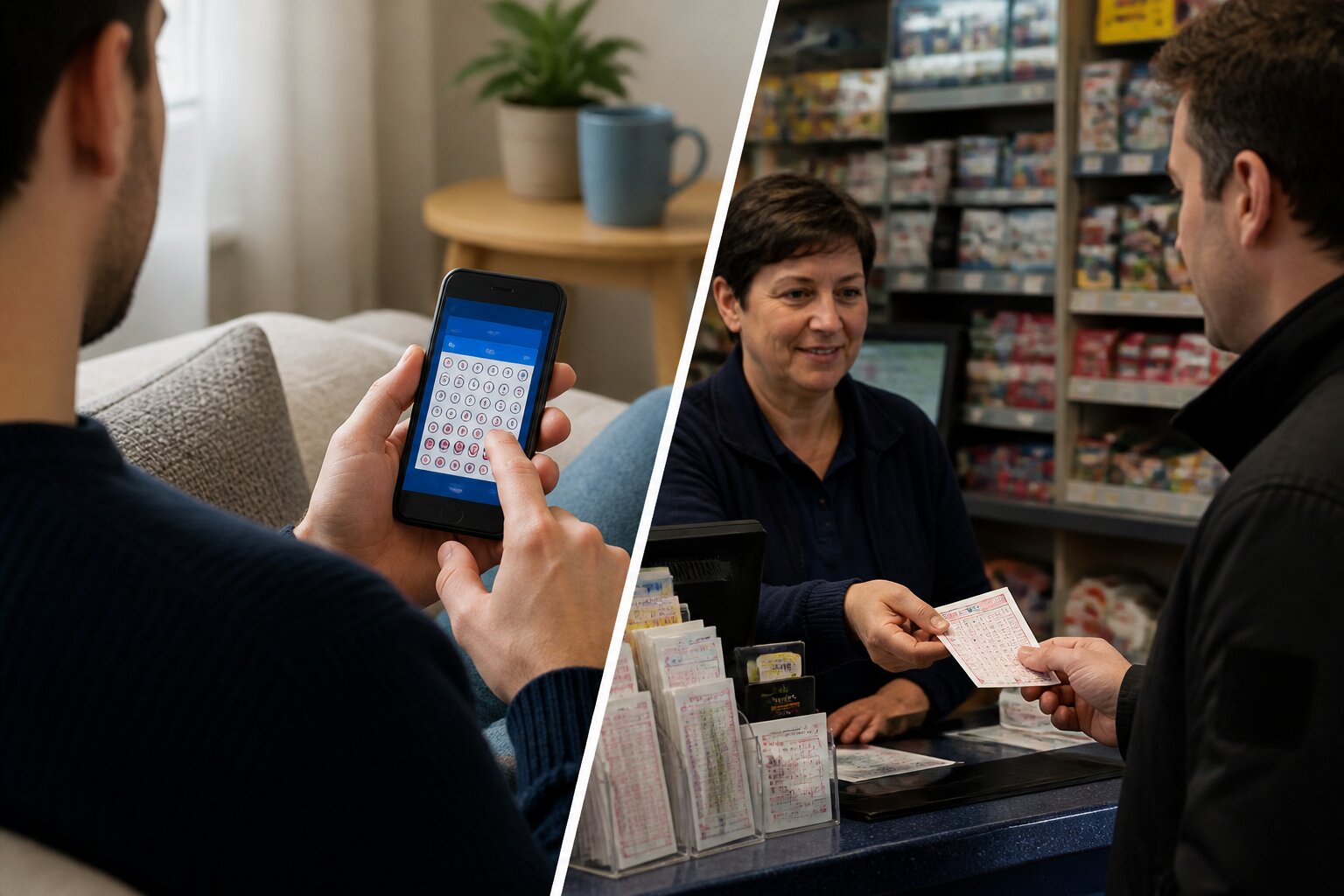
With a quick click, you can buy a lottery ticket from the comfort of your sofa or stick to the tradition of picking one up at your local shop. Where you buy your ticket affects more than convenience — it changes how you pay, how your entry is recorded and how you claim any winnings.
This post highlights the practical contrasts between buying lottery tickets online and in-store. Read on to understand security, payments, games available, costs, privacy and who can play so you can decide which option fits you best.
Convenience: Which Option Suits Your Lifestyle?
Buying a lottery ticket online is straightforward and flexible. You can play at any hour, whether at home or on the move, and paper tickets aren’t needed. Many websites and apps let you set up reminders or recurring entries, so you don’t need to think about each draw. Online accounts also keep a clear digital record of entries, which helps if there is ever a question about a purchase.
Purchasing in-store offers a different experience. A trip to a newsagent or supermarket fits into routines for some people and gives an immediate, tangible ticket. The act of buying in person can feel more social or ritualistic, and some players appreciate having the paper ticket to keep.
Choose the method that fits around your everyday responsibilities and spending limits — and make that choice before you buy, to keep things simple and controlled. Next, we’ll look at how both routes protect your entry and payments.
Security & Legitimacy When Buying Lottery Tickets
Security and legitimacy matter whether you play online or at a shop. Licensed operators are subject to regulation and must meet standards for player protection and fairness; this regulation governs how tickets are sold and how wins are paid.
Online purchases use encrypted systems to protect personal and payment data, and entries are logged in an account so there’s a permanent record. Retail sales are also controlled: approved sellers issue uniquely numbered tickets and record transactions at the point of sale. If something goes wrong with a paper ticket, there are established steps to resolve it, though keeping the physical ticket safe is important.
These verification and record-keeping practices are designed to ensure the right person receives any prize, and they lead naturally into how payments and prize claims are handled in each channel.
Payment Methods & Claiming Prizes
Payments and prize claims follow strict checks to confirm identity and eligibility. This protects funds and helps prevent fraud.
Online platforms typically accept debit cards and some digital wallets, with payments processed through secure channels. Small prizes are usually credited to the player’s online account; larger sums trigger additional identity checks before a withdrawal is authorised. These procedures verify that prizes are paid to the rightful owner.
In-store purchases tend to involve cash or card at the counter and result in a paper ticket as proof of entry. Smaller prizes may be paid out by the retailer, whereas larger wins are handled through official claims processes that require the ticket and ID checks. Whatever the route, verification is part of ensuring winnings are distributed correctly.
Having seen how payments and claims work, it’s useful to consider the range of games and extra features each option offers.
Availability of Lottery Games & Features
The selection of games and features varies between online services and physical retailers. Online platforms often list a wider range of draws, instant-win games and extras such as multi-draw entries, quick-pick options and easier ways to join syndicates. These features can make it simpler to manage multiple entries or try different formats without visiting a shop.
In-store choices are generally centred on the principal national draws and whatever ticket types the retailer stocks that day. Special features are less common at the counter, so if you want to use syndicates or take advantage of subscription-style entries, online providers tend to be more convenient.
With game choices in mind, the next question for many players is whether one route costs more than the other.
Costs & Fees: Are There Hidden Charges?
Ticket prices for national draws are set by the operator and are usually the same online and in-store. Standard single-line entries will generally cost the same at the counter as they do through an authorised website.
Some online services may charge for optional extras such as syndicate management or subscription features, and certain payment methods can attract a fee. These charges must be disclosed before purchase, so it’s sensible to review the terms on the payment screen. In-store purchases rarely involve additional fees beyond the ticket price displayed.
Knowing where any extra charges might appear helps when deciding how to buy, and it’s worth checking the payment and terms section before completing an online purchase. Next, we turn to how your personal information is handled.
Privacy & Data Protection Considerations
Privacy is handled differently depending on how you buy. Online operators collect and store personal data to process payments, verify identity and maintain account records. This information is protected under data protection laws and kept secure; it is only used for the purposes necessary to provide the service, and marketing communications require explicit consent.
Purchases at a shop are more anonymous: you normally do not need to supply personal data to buy a ticket, though larger prize claims may require identification. In those cases, retailers follow legal and regulatory obligations when handling information.
Understanding these differences helps you choose the option that best aligns with your expectations about data and privacy. The next essential point is who is eligible to play.
Eligibility & Age Verification: What Are the Requirements?
Age and eligibility checks are mandatory. Only people aged 18 or over may purchase lottery tickets, whether online or in person. This rule applies to all forms of lottery play across the UK and is strictly enforced to protect vulnerable groups.
Online platforms perform identity and age verification before allowing play, which can involve entering personal details and sometimes providing documents such as a passport or driving licence. Verification methods may also use electronic checks against public records. These steps are taken to ensure players meet the legal age and are who they say they are.
Retailers are required to check ID if there is any doubt about a customer’s age, and sales will be refused if proof cannot be shown. Staff are trained to refuse a sale where appropriate, and businesses must follow the same legal standards whether the transaction is in a shop or at an event.
These safeguards protect younger people and help maintain a fair environment for all participants. They also support responsible play by linking to where and how help is available if questions arise, including information and signposting to support services for anyone who may need it.
Customer Support
Customer support is available both online and through retailers, but the routes and responsiveness differ. Online players generally have access to digital channels such as live chat, email and comprehensive help sections that cover common queries. These resources are designed to be accessible without needing to leave home.
When you buy in-store, immediate assistance from shop staff is the most direct option. Retailers can answer basic questions about purchases and the claims process and will direct more complex queries to official lottery contacts. Both online and in-person support can signpost specialist services if a player needs additional help.
Whether you prefer the convenience of remote support or the immediacy of face-to-face help, each route provides ways to resolve issues and get guidance. This overview should make it easier to decide which purchasing method suits your needs, so you can buy with confidence and clarity.
**The information provided in this blog is intended for educational purposes and should not be construed as betting advice or a guarantee of success. Always gamble responsibly.