
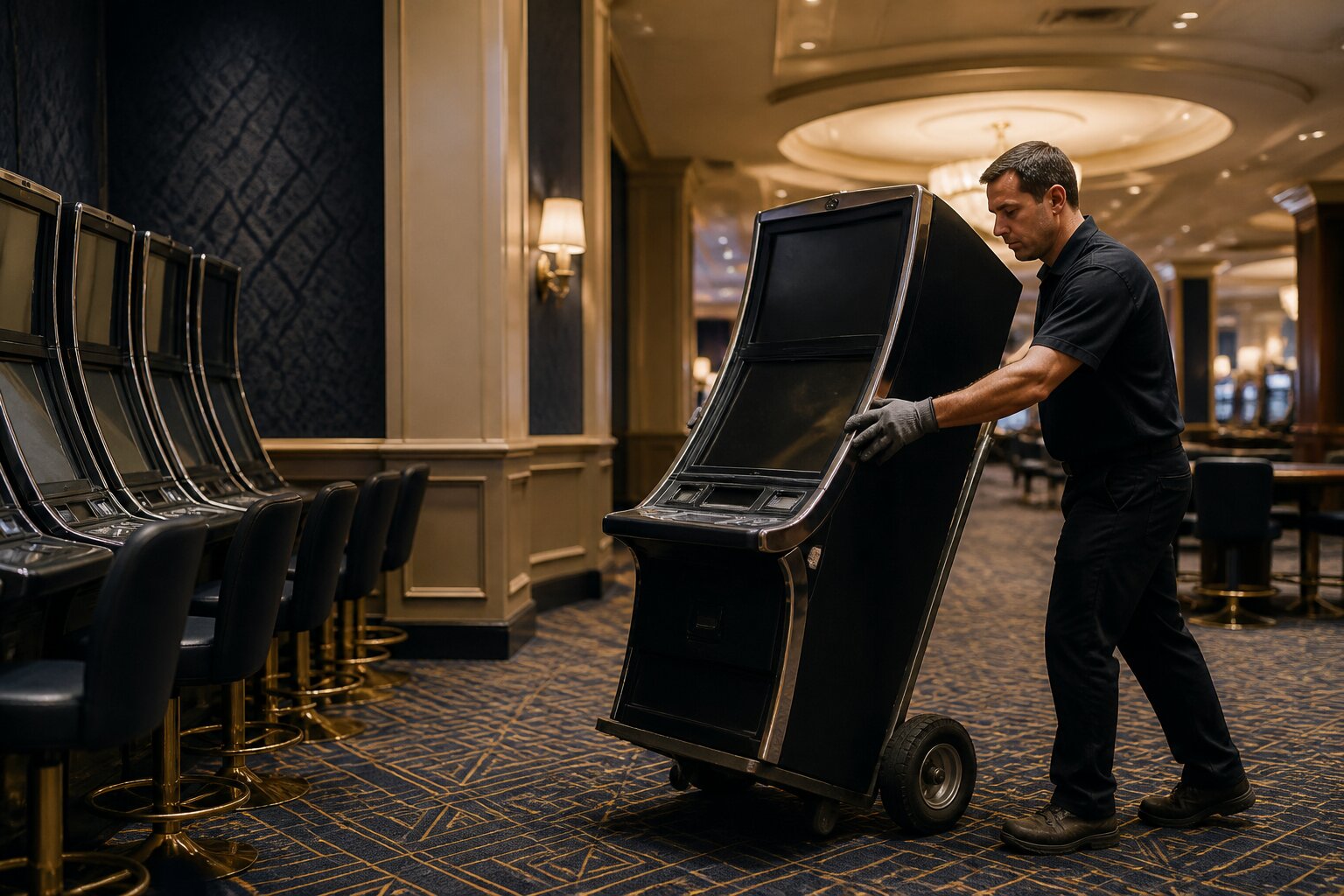
Ever wondered why your favourite slot machine suddenly disappears from the casino floor? You are not alone—many players are puzzled when a familiar game is gone.
There is more to these decisions than meets the eye. Behind every removal sit business reasons, technical considerations and legal requirements that shape how a casino operates.
If you want a clear picture of what drives those changes and what they mean for your experience, read on. Each section explains a different factor so you can see the full story behind the machines.
What Are the Main Reasons Casinos Remove Slot Machines?
Casinos remove slot machines for a mix of practical reasons rather than any single cause. The most common factors are how well a machine performs, what players are choosing to play, whether the machine needs too much maintenance, and whether it still meets current regulatory requirements.
Performance relates to how much play a game attracts and how much revenue it produces relative to the space it occupies. Player demand covers shifts in taste: themes, features and formats that once drew crowds may no longer do so. Maintenance and technology issues arise when older hardware becomes unreliable or incompatible with newer systems. Finally, legal or compliance changes can force immediate removal if a machine no longer fits the rules.
Together, these elements help casinos keep a floor that is appealing, safe and operationally sensible.
How Do Casinos Decide Which Machines to Remove?
Decision-making is typically data-driven. Operators look at play patterns and revenue figures over time to identify underperforming machines. Those figures are considered alongside maintenance records and how often a machine requires technician attention.
Reviews also include checks on whether a game is current with industry standards and whether it integrates with the casino’s broader systems. If a machine is frequently offline or causes repeated disruption for staff and players, it becomes a strong candidate for replacement.
Regulatory checks are folded into these reviews so that any non-compliant equipment is addressed promptly. The overall aim is to ensure the floor remains reliable and aligned with the operator’s strategy and customers’ preferences.
Revenue Performance: When a Slot Machine Stops Earning
A machine that no longer attracts play will typically generate less revenue than its neighbours. Casinos monitor income per machine and compare it to targets for the same footprint. When a game consistently underperforms, reallocating that space to a title with stronger appeal is a practical business response.
Removing underused machines also frees budget and floor area for new games that might better reflect current player interest. These swaps are about maintaining a viable offering for patrons rather than changing anything about how individual games operate.
Financial considerations are balanced with the need to provide a varied selection that keeps the overall experience fresh and sustainable.
Changing Player Preferences & Slot Machine Popularity
Player tastes change over time. New game mechanics, visual styles, or jackpot structures can shift attention away from older titles. Casinos monitor which games are attracting players and which are not, then adapt the offering to reflect those trends.
Examples of elements that can drive a shift include:
- New game mechanics that offer different ways to win.
- Updated visual and audio design that feels modern.
- Jackpot structures that change the risk and reward profile.
Introducing titles that match contemporary preferences helps keep the gaming floor engaging and relevant. Operators also balance variety with responsible practice, removing or rotating out games that see little play while retaining favourites that perform well.
At the same time, operators aim to ensure their selection does not encourage excessive play and that every game meets industry standards for fairness and safety. This includes checks such as clear information about game rules and return-to-player, age verification, and tools that help players set limits when needed.
This ongoing refresh helps both regulars and newcomers find games that suit their interests, while supporting a safer, more transparent experience for everyone.
Casino Floor Space Management Explained
Floor planning is an important operational task. Casinos aim to present a selection that balances different types of machines while keeping foot traffic and sightlines sensible.
A well-considered selection typically includes:
- popular favourites that attract regular play,
- niche options that serve specific player interests,
- a variety of machine types to offer choice across themes and stakes.
Removing machines that are rarely played allows staff to rearrange floor flow and introduce machines with broader appeal. Such changes are usually based on play data and observation, and they are reviewed regularly to respond to changing demand.
Decisions also consider accessibility and the guest experience. For example, machines may be grouped to make it easier for players to find similar games, for staff to monitor activity, and for maintenance teams to access equipment without disrupting guests.
Practical layout choices help create an environment that is easier to navigate and maintain. Clear sightlines, sensible spacing, signage and designated pathways contribute to safer movement and a more comfortable experience for everyone who uses the space.
Regulatory Requirements & Slot Machine Compliance
Regulatory standards are central to which machines remain in operation. Slot machines must comply with current rules covering:
- game integrity,
- technical safeguards,
- player protection features.
When regulations change, a machine may need updating or removal to remain compliant. Updates can include software patches, hardware replacements, adjustments to payout or volatility settings, or enhanced player‑facing features such as clearer information displays and support for self‑exclusion tools.
Operators routinely test and audit machines to confirm they meet standards. Testing typically covers random number generator certification, accurate accounting of credits and payouts, secure communications, and tamper‑evident protections. Independent third‑party labs may be used alongside internal checks to provide objective verification.
If a device cannot be brought up to the required specification, it is withdrawn from service until the issue is resolved. Machines removed for non‑compliance are tracked and documented, with records kept to show corrective actions and proof of revalidation before reinstatement. These checks help protect players and ensure the establishment meets its legal obligations.
What Happens to Removed Slot Machines?
Once a machine is taken off the floor there is a defined process for handling it. Machines are secured and assessed to determine whether they can be refurbished, repurposed or must be disposed of.
If a machine can be upgraded to meet current standards, it may be refurbished and returned to use. Other machines in good condition might be sold or transferred to other licensed operators where permitted. Parts that remain useful can be recycled to support maintenance of other machines. Those beyond repair are dismantled and disposed of in line with environmental and legal requirements.
Every step is managed to ensure equipment is handled responsibly and securely.
Are Old Slot Machines Ever Recycled or Sold?
Yes, machines often find new life. When a unit is mechanically sound and compliant, it can be sold to another licensed operator or refurbished internally. Recycling useful components is common practice and reduces waste while supporting operational needs.
Machines that cannot meet safety or regulatory thresholds are removed from circulation and disposed of following environmental rules. The intention is always to manage assets responsibly while complying with legal obligations.
How Often Do Casinos Update or Replace Their Machines?
There is no fixed timetable for updates. Frequency varies by venue and is driven by a mix of commercial and practical considerations.
Some of the factors that influence how often machines are changed include:
- player interest and demand for particular games or themes
- the pace of technological development in slot hardware and software
- routine maintenance needs and the service life of individual machines
Some casino floors see regular, incremental updates to keep the selection looking fresh and to respond quickly to changing player preferences. Others plan larger, less frequent refreshes timed with the release of new game series or when a new generation of hardware becomes available.
Operational considerations also play a part. Budget cycles, staffing levels, and supply-chain availability affect when a casino can afford to replace or upgrade equipment. The overall aim is to keep a balanced mix of familiar favourites and newer titles so the offering stays attractive to a wide range of customers without causing unnecessary disruption.
Do Casino Policies on Slot Machine Removal Differ?
Policies do vary between operators because each business balances different priorities. These can include:
- customer base
- venue size
- brand positioning
- commercial strategy
One casino might prioritise more frequent rotation to spotlight new suppliers and keep the floor feeling fresh. Another may favour a stable core of long-standing machines that regulars enjoy and that reliably generate income. Decisions are also influenced by factors such as maintenance costs, contractual agreements with manufacturers and player feedback.
What unites them is adherence to regulatory requirements and a duty of care to patrons. Regardless of policy nuances, operators must ensure machines meet technical, safety and fairness standards before they are placed on the floor. They are also expected to remove or withdraw machines if they no longer comply with regulations, present a safety concern, or if continued operation would be irresponsible from a player-protection perspective.
Myths About Slot Machine Removal Debunked
Several misconceptions persist about why machines are removed. One frequent misunderstanding is that machines are taken away to alter outcomes or change player prospects. In practice, game operation is governed by technical standards, independent testing and certification, so outcomes cannot be arbitrarily adjusted by staff.
Another common myth is that machines are removed because they paid out too often. In reality, removals are usually driven by a combination of factors rather than informal notions about a machine's recent behaviour. Typical drivers include:
- performance and popularity on the floor
- technical status, such as faults or the need for upgrades
- regulatory compliance, including inspections and certification requirements
- commercial priorities, for example space management and new game rollouts
Each of these is considered as part of routine floor management, and decisions are recorded and overseen according to normal regulatory and operational procedures.
Clarifying these points can help players make sense of changes on the floor and focus on relevant information when deciding where to play, such as venue reputation, licensing, and responsible gambling measures.
Summary: What It Means for UK Casino Visitors
Changes to the slot machine line-up are normal and the result of a combination of commercial, technical and regulatory reasons. Operators review performance, update machines to meet standards, and manage floor space to keep the offering relevant and well maintained.
When a machine is removed, it is handled under secure, regulated procedures that cover refurbishment, resale, recycling or disposal. Across the industry, compliance and player protection remain primary concerns.
If you notice a favourite machine has gone, the change is part of ongoing efforts to balance choice, safety and operational efficiency.
**The information provided in this blog is intended for educational purposes and should not be construed as betting advice or a guarantee of success. Always gamble responsibly.