Ever wondered if there’s a secret set of numbers that come up more often on the roulette wheel? You’re not alone. Players of all experience levels often ask whether some numbers show up more frequently and whether any of that can be used to improve outcomes.
This article looks at what the evidence and the maths actually say, explains how roulette works, and gives clear, practical context for choosing numbers without making unrealistic promises. If you want to understand patterns, odds and what matters most at the table, read on.
How Does Roulette Work?
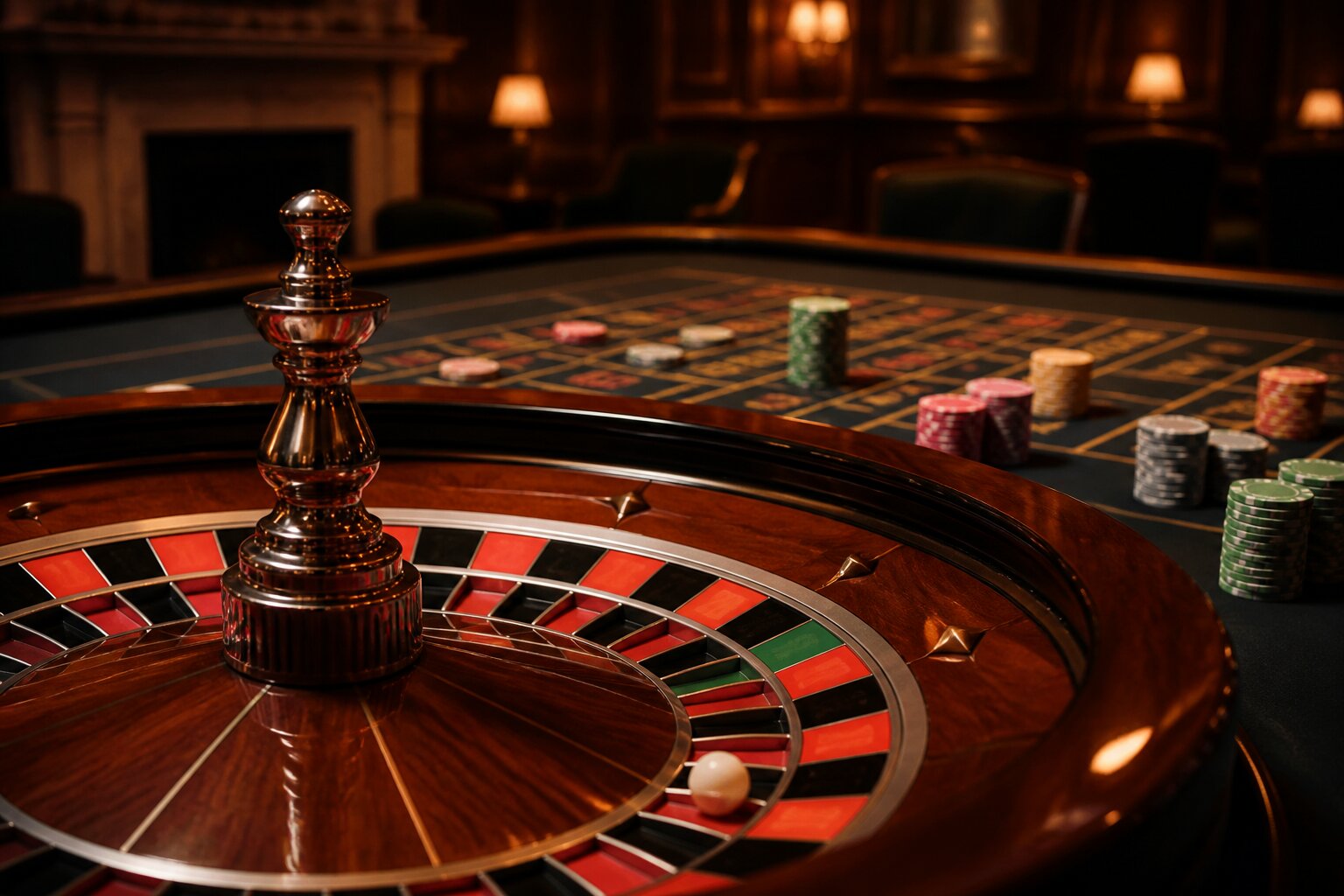
Roulette is straightforward to learn. A wheel contains numbered pockets—typically 0 to 36 in European roulette, and 0, 00 and 1–36 in American roulette. Players place bets on individual numbers, groups of numbers, colours, odd or even, or high and low ranges. The croupier spins the wheel one way and rolls a small ball the other; the pocket where the ball settles decides the winners.
Each spin is an independent event governed by the physical wheel or, in online games, by a certified random number generator. That independence means the outcome of one spin does not affect the next. Wheels and digital systems are subject to regulation and testing to make sure results are impartial and transparent. Understanding this independence is important before looking at claims about “hot” numbers or patterns in results, which we explore next.
What Are the Most Commonly Hit Numbers on a Roulette Table?
Mathematically, every number on a properly functioning wheel has the same chance of landing on any given spin. In European roulette, each number has a 1 in 37 probability (about 2.7%). In American roulette, with two green pockets, each number has a 1 in 38 probability.
Short-term sessions can show apparent clusters where some numbers appear more often, but these are natural fluctuations of randomness rather than a reliable bias. In physical casinos, imperfect equipment can occasionally cause measurable deviations, but regulated venues routinely inspect and maintain their wheels to prevent that. In digital play, RNGs are tested and certified to ensure fair distribution of outcomes.
With that mathematical foundation in mind, the next section looks at why people perceive certain numbers as appearing more frequently.
Why Do Some Numbers Seem to Hit More Often?
People often notice streaks—one number turning up several times in a short period—and infer a pattern. This impression comes from the way random processes can produce runs and clusters without any underlying cause. Such short-term anomalies are expected; they don’t indicate that the wheel “favour”s particular pockets.
Because every spin is independent, previous outcomes provide no information about future results. Perceiving a pattern is a normal human response to randomness, but it doesn’t translate into predictive power. Keeping this perspective helps avoid chasing perceived trends and encourages clearer thinking about odds and potential equipment issues, which are discussed in the next part.
How Are Roulette Odds Calculated?
Odds are calculated from the number of possible outcomes. A single-number (straight) bet in European roulette has a 1 in 37 chance; in American roulette it is 1 in 38. Payouts reflect these probabilities—for example, a straight bet commonly pays 35 to 1 even though the true chance of winning means the expected return is less than the payout ratio, which is how the house retains an edge.
Different bet types cover different shares of the wheel and therefore carry different probabilities and payouts: even-money bets cover roughly half the numbers (adjusted for the green pockets), while number or sector bets cover smaller subsets. Clear knowledge of these relationships helps players understand risk and return without relying on myths, a point that relates to the “hot number” idea addressed below.
Is There a Hot Number Myth?
Many players talk about “hot” and “cold” numbers, believing some are on a streak while others are overdue. That language can be useful for describing short-term observations and the flow of a session, but it should not be taken as evidence of predictive behaviour or a reliable guide to future outcomes.
What Do Players Mean by “Hot” and “Cold” Numbers?
A “hot” number describes one that appears frequently during a session; a “cold” number is one that has been absent for a stretch. People often track these patterns for entertainment or as part of personal strategy, and the labels simply describe recent history rather than indicating any change in likelihood.
Using these terms helps players talk about what they have just seen, but it is important to remember they reflect luck over a short run, not a shift in the game itself. Treating them as a source of certainty can encourage unhelpful betting choices.
Can Previous Spins Influence Future Outcomes?
There is no mechanism by which prior spins alter the physics of the wheel or the functioning of a random number generator. Each spin is independent and governed by the same probabilities as every other spin. Short-term streaks are a normal part of randomness; they do not change future odds.
Believing that a number is "due" because it has not appeared recently is an example of the gambler's fallacy. Acting on that belief can lead to chasing losses and placing larger stakes than intended. Players should be aware that patterns will occur by chance and that all bets carry the risk of loss.
Are There Patterns in Winning Roulette Numbers?
Attempts to find enduring, exploitable patterns usually come up short. Both physical casino wheels and certified digital systems are designed to prevent systematic bias. Where patterns do occur for extended periods, they are typically traced to mechanical wear or misalignment—which operators are required to detect and correct.
Because random distributions naturally produce apparent sequences, human pattern-seeking will often interpret noise as meaningful structure. A more useful approach is to understand the statistical nature of the game and the role of regulation and testing in maintaining fairness. With that resolved, it’s helpful to compare the main wheel types and how they distribute numbers.
Types of Roulette and Number Distribution
Mainstream roulette variants differ mainly in pocket count and layout rather than in fairness. European wheels have a single zero and 37 pockets; American wheels add a double zero and have 38. The extra pocket in the American version slightly increases the house edge.
Both wheel types alternate colours and mix odd and even numbers so that no area of the wheel favours a single characteristic. The table layouts match these distributions to offer equivalent betting choices regardless of format. Knowing the layout and its effect on odds can inform whether a player prefers one variant over another, which ties into how people choose their numbers.
Should You Focus on Certain Numbers or Play Randomly?
Choosing particular numbers or picking them at random makes no difference to the underlying probability of a win. Some players enjoy selecting personal numbers, while others prefer random bets for variety; both are equally valid as personal preferences. The real considerations are bankroll management and knowing the odds for the bets being made, rather than searching for a number that performs better.
Keeping bets proportional to available funds and treating play as entertainment rather than income helps preserve control and enjoyment. If tracking outcomes adds to the experience without altering behaviour in risky ways, it can be part of the fun. The final section sums up the essentials to keep in mind at the table.
Summary: What to Remember About Roulette Numbers
Roulette outcomes are governed by probability and by the integrity of the equipment or software in use. No number is inherently more likely to appear on a properly functioning wheel, and short-term streaks do not affect future spins. Understanding the maths behind the game, the differences between wheel types, and the role of regulation gives a clear, practical view of what to expect when placing bets.
Approach the game as a form of entertainment, make selections that suit your enjoyment, and use sensible limits to keep play within personal means. If you stick to those principles, you can take pleasure in the game’s variety while avoiding the pitfalls of chasing imagined patterns.
**The information provided in this blog is intended for educational purposes and should not be construed as betting advice or a guarantee of success. Always gamble responsibly.