
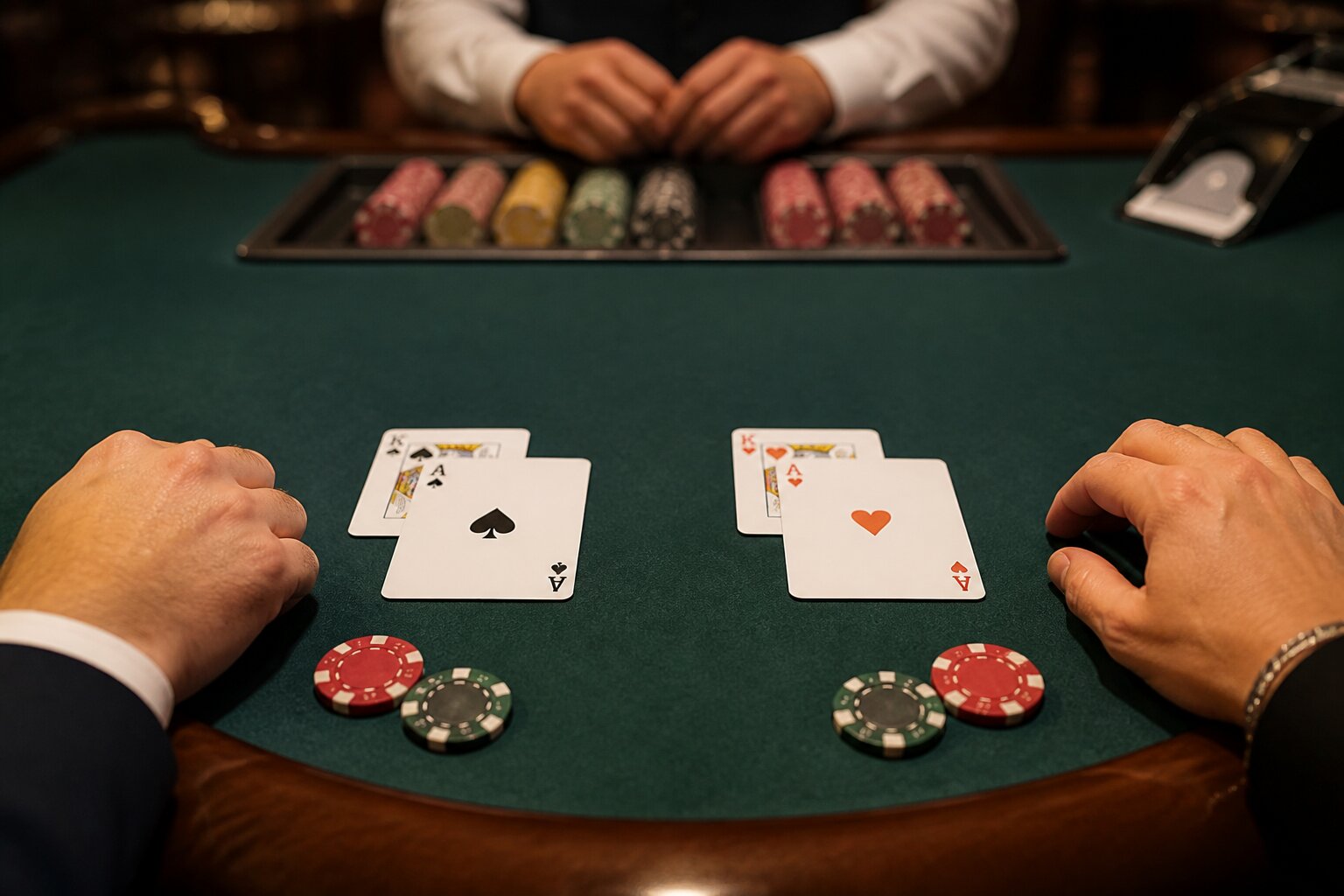
Blackjack is a popular card game in both land-based and online casinos, known for straightforward rules and brisk play. When several hands reach 21 in the same round, the outcome can look dramatic, but the rules are simpler than they appear.
This article explains what happens when multiple players have 21, how payouts are determined and how ties with the dealer are resolved. Read on to clear up the confusion and feel more confident at the table.
Who Wins When Two Players Get 21 in Blackjack?
Even when two or more players reach 21, the contest is never between the players. Each player’s hand is compared only with the dealer’s hand at the end of the round. That means if you and another player both have 21, you each resolve your result separately against the dealer.
If neither the dealer nor a player has a higher total, a player with 21 wins if the dealer has a lower total or goes bust. If the dealer also has 21, the round typically ends in a tie, called a push, and the bet is returned. Because outcomes are settled individually, multiple players can win, lose or push in the same round depending on the dealer’s final hand.
This focus on beating the dealer keeps the game clear: your performance is assessed against the dealer, not against the other players.
House Rules: Does the Payout Change with Multiple 21s?
Payouts are defined by the casino’s rules and do not change if several players reach 21 in the same round. The most important distinction is whether a hand is a blackjack, which affects the amount paid.
A blackjack, the combination of an Ace and a 10-value card on the first two cards, normally pays 3:2. For example, a £10 bet would win £15, plus the original £10 is returned. A total of 21 made with three or more cards is treated differently and usually pays even money if it beats the dealer, so a £10 bet returns £10 in winnings.
Multiple winners do not share a larger pool or receive higher payouts because other players have the same total. Each settlement is calculated independently according to the table rules.
If you are unsure of the exact payout, check the table’s rules before you play so you know how different hands will be paid.
What If a Dealer Also Has 21?
When the dealer ends the round with 21, outcomes depend on whether that 21 is a blackjack or a non-natural 21, and the same distinction applies to players’ hands.
If both a player and the dealer have blackjack, the result is normally a push and the player’s stake is returned. If the dealer has blackjack and a player’s 21 was achieved with three or more cards, the dealer’s blackjack takes precedence and the player loses that wager. Conversely, if a player has blackjack and the dealer has a non-natural 21, the player’s blackjack wins and is paid at the blackjack rate.
These rules mean the order and nature of the cards matter as well as the totals. Knowing the difference between a natural blackjack and a multi-card 21 helps explain why two identical totals can lead to different outcomes.
Blackjack vs. 21: Is There a Difference?
There is a distinct difference between a blackjack and any other 21. A blackjack is specifically an Ace plus a 10-value card on the first two cards, and it usually receives a higher payout because it is treated as a special result.
A 21 formed with more than two cards is not a blackjack and does not receive the same payout rate. Blackjack is commonly paid at a premium in many games, whereas a non-blackjack 21 is paid at even money. The distinction also matters for side bets such as insurance and for whether the dealer checks for a blackjack when showing an Ace.
Aside from payout differences, a blackjack is also resolved against the dealer differently in tied situations, as noted earlier. For example, when both player and dealer have 21 from more than two cards the result will usually be a push, but a player blackjack will typically beat a dealer 21. These differences affect both strategy and expectations at the table, so it is useful to keep them in mind.
Key practical differences include:
- Payout: blackjack commonly pays at a higher rate than a regular 21.
- Resolution of ties: a two-card blackjack is treated differently to a multi-card 21 when comparing with the dealer.
- Game procedures: dealer checks for blackjack and split options may apply differently when an Ace appears.
Common Misconceptions About Ties in Blackjack
One frequent misconception is that players must split or share winnings when they have the same total of 21. In reality, each player’s result is settled separately against the dealer, so no sharing of payouts occurs.
Another mistaken belief is that a tie with the dealer always means a loss. A tie, or push, typically means the stake is returned. That applies whether the tie is at 21 or any other total. It is also worth noting that a player who has 21 but not a blackjack will not be paid at the blackjack rate if the dealer also has 21; instead, it is treated as a push or a loss depending on whether the dealer’s 21 is a blackjack.
Clearing up these points helps to avoid surprises at the table and makes it easier to judge how a round will finish.
What Is a Push in Blackjack?
A push occurs when a player’s hand and the dealer’s hand have the same total. The result is simple: the player’s original bet is returned and no one wins the stake for that round.
How Does a Push Work?
When both you and the dealer have the same total, including 21, your stake is returned rather than being paid out or lost. This applies whether the totals were reached with two cards or more, except in cases where one side has a natural blackjack and the other does not. If both have natural blackjack, the usual result is a push.
Pushes are a routine part of the game and are handled the same way across most tables. If you want to avoid unexpected spending, set clear limits on your stakes before you sit down so you know what you are comfortable risking.
**The information provided in this blog is intended for educational purposes and should not be construed as betting advice or a guarantee of success. Always gamble responsibly.