Ever been sat round the table with mates and found yourself confused when someone says “Let’s play poker”—only to realise half the group’s thinking about Texas Hold’em, while the rest mean something entirely different? You’re not alone. Poker is one of those games everyone’s heard of, but the details can get blurry fast, especially when it comes to the actual rules and how it’s played.
It’s easy to mix up all the different versions, too. The term “regular poker” means something different depending on who you ask—sometimes it’s Five Card Draw, sometimes it’s brag, and for some, it’s simply whatever game you played with your family growing up. Meanwhile, Texas Hold’em has shot to fame thanks to televised tournaments and the online scene, but most people only really know it through snippets on the telly or the odd night at the pub.
So, what truly sets Texas Hold’em apart from the rest? Where do the myths end and the real differences begin? If you’ve ever wondered why Hold’em is everywhere these days or found yourself caught out by unexpected rules, you’re certainly not the only one.
Texas Hold'em vs Regular Poker: What Sets Them Apart?
The biggest difference between Texas Hold’em and what most people call “regular poker” lies in how cards are dealt and how the betting works.
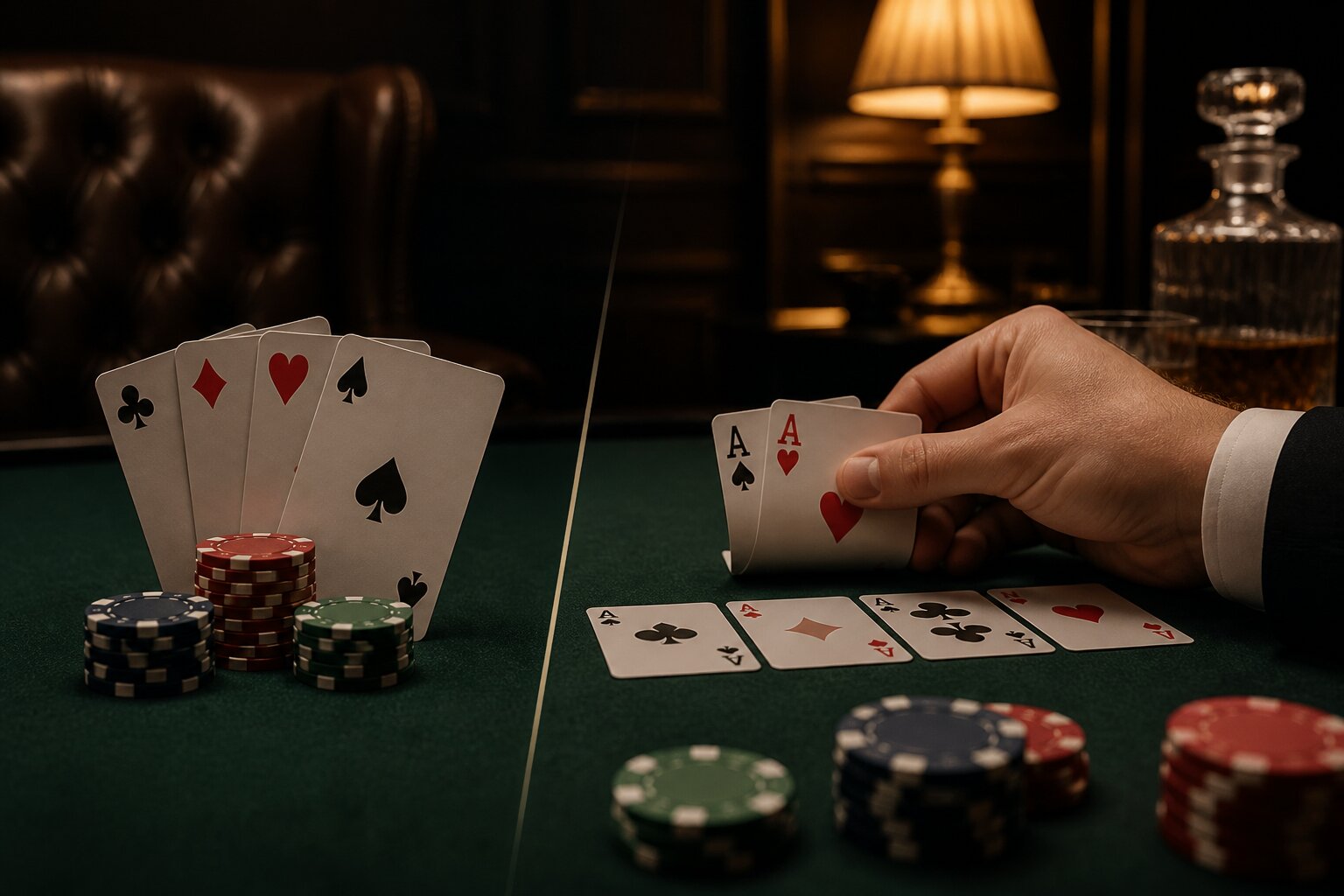
In Texas Hold’em, each player gets two cards face-down (known as hole cards), and then five community cards are placed face-up in the middle of the table. Everyone uses a combination of their hole cards and the shared community cards to make the best five-card hand. The action is fast-paced, with four separate betting rounds: pre-flop, flop, turn, and river. The community cards let you see a lot of the action unfold and makes bluffing or reading opponents a huge part of the game.
Regular poker usually refers to older variants like Five Card Draw or Seven Card Stud. In Five Card Draw, you’re dealt five cards face-down and there are no community cards at all. After a round of betting, you can exchange some or all of your cards for new ones in hopes of improving your hand, and then there’s another round of betting. It’s very much about playing your own hand, with little information about your opponents’ cards.
Seven Card Stud offers yet another feel—players get seven cards each, some dealt face-up, some face-down, but there aren’t any shared cards in the middle. Betting happens after each new card is dealt, so you’ve got to keep track of which cards are showing and guess at what hands are being made.
Put simply, Texas Hold’em is all about combining your cards with the shared community cards, table talk and strategy, and the thrill of big showdowns, while variants like Draw or Stud are more secretive, with each player keeping most (or all) of their hand hidden from everyone else. The way you bet, the cards you see, and the skillsets you need are all shaped by these core differences. If you want to explore how people actually name “regular poker”, the next section breaks that down.
Understanding Poker: What Does ‘Regular Poker’ Actually Mean?
The term ‘regular poker’ is a bit misleading, as it doesn’t describe any one specific game. Instead, it usually refers to older, traditional forms of poker that were popular before Texas Hold’em dominated casinos and TV screens. In the UK, when people mention “regular poker,” they’re often talking about the classic variants many learnt at family gatherings, social clubs, or pubs.
Generally, ‘regular poker’ means games where each player is mostly dealt their own cards rather than using communal cards. The types of poker most commonly included are:
Five Card Draw
Every player receives five cards face-down. After the initial betting, you can swap some or all of your cards for new ones in hopes of improving your hand. It’s a simple, straightforward game that many consider the ‘original’ home poker.
Seven Card Stud
Each player ultimately gets seven cards—some face-up so others can see, the rest face-down. You use the best five-card combination out of those seven. With no community cards, reading opponents is all about what’s visible.
Five Card Stud
Each player gets one card face-down and four face-up, with betting after each new card. This version is less common now but remains a classic format.
There’s no single set of rules that defines ‘regular poker’, and house rules or traditions often come into play. When people use this term, it’s best to clarify exactly which variant is meant, as it can be a source of confusion.
Table Setup & Card Dealing Explained
Table setup in poker is shaped by the type of game being played. In Texas Hold’em, the table is often oval-shaped, seating between 2 to 6 players comfortably. Each player has a space for their chips, cards, and a clear view of the community cards dealt in the middle. A dedicated spot is reserved for the dealer—or a dealer button in home games. Cards are dealt clockwise, starting from the player next to the dealer button.
In Texas Hold’em, every player gets two cards face-down. After an initial round of betting, five community cards are eventually placed face-up across the centre: three in the ‘flop’, one for the ‘turn’, and one for the ‘river’. These shared cards are central to the game’s strategy and excitement.
For Five Card Draw, the table can be round or oval and is suited for smaller groups of 2 to 6 players, helping the action keep moving quickly. Players each receive five cards, all face-down, with no community cards on the table. Chips and betting are managed in front of each player.
Seven Card Stud tables have no community cards laid out. Each player receives two cards down, and one up to start, then alternates up and down cards until each has seven cards (three face-down, four face-up). This variant works well with up to 8 players, allowing everyone to see important up-cards for reading hands and making decisions.
A sensible table size ensures everyone has space and helps the dealer keep the pace fair—key factors in making poker an enjoyable, controlled experience. The way the table is laid out directly affects how betting flows, which is what the next section examines.
How Do The Rules Differ?
While all poker games share the central aim of making the best hand, the rules can vary a great deal depending on which variant you’re playing. The way bets are placed and how many people can join each game make a noticeable difference to the rhythm of play and the decisions you’ll make.
Betting Structures Compared
Texas Hold’em is well known for its “no limit” variant, particularly in many cash games and televised events. This means players can bet any amount up to their full stack at any stage. There are also “fixed limit” and “pot limit” formats: fixed limit imposes strict bet and raise amounts for each round, while pot limit caps a bet at the current pot size.
Five Card Draw is typically played as a fixed limit game in home and social club settings. Betting amounts are set in advance and remain the same, making it a little less intimidating for newcomers and keeping pots more predictable. Some friendly games use pot limit for extra suspense, but true no limit Draw is uncommon.
Seven Card Stud is almost always fixed limit. As each round of cards is dealt and new betting rounds begin, bet sizes are set and can only be increased in specific increments. This steadier structure limits swings in any single hand and alters the long-term strategy.
To illustrate, in a £1/£2 fixed limit Draw or Stud game, bets and raises on early rounds must be £1, increasing to £2 in later rounds. In No Limit Hold’em, a player might move all their chips at a single point, changing the shape of the pot and the tactical considerations for everyone involved.
Number of Players at the Table
Texas Hold’em can accommodate anywhere from 2 (“heads-up”) to 10 players, with 6 or 9 being popular choices in many venues. Larger tables speed up action, while smaller tables often reward more focused, tactical play.
Five Card Draw usually works best with 2 to 6 players, as too many people would strain the deck during the draw stage. The game’s pace and strategy shine when every player has space to think and act.
Seven Card Stud can comfortably fit up to 8 players before there’s a risk of not having enough cards left in the deck for everyone’s seventh card. This creates an intimate atmosphere but still gives plenty of opportunity for variety and competitive play.
Across these formats, variance—how random the card distribution is—affects results in the short term, while decision-making influences outcomes over many hands.
Common Misconceptions About Texas Hold'em & Traditional Poker
With so many versions of poker around, it’s no surprise that a few myths and misunderstandings can cloud the picture. Some beliefs about how the games work, or which version is “easier”, stick around even though they’re not always accurate. Here’s the truth behind some of the most common misconceptions.
Are the Winning Hands Different?
Many believe that hand rankings change across versions, but the classic poker hand order (from high card up to royal flush) remains the same whether you’re playing Texas Hold’em, Five Card Draw, or Seven Card Stud. A flush beats a straight, and a full house beats three of a kind no matter which variant you play. The way those hands are made might differ—using hole and community cards in Hold’em, or all your own in Draw—but the final rankings themselves stay consistent.
Is One Game Harder to Learn Than the Other?
There’s a perception that Texas Hold’em is trickier because of all the betting rounds and community cards, especially when you see the pros in action. However, the basics—understanding hand rankings and the flow of a round—are straightforward in both Hold’em and classic games like Five Card Draw or Seven Card Stud. Each variant has its own rhythm and strategies; all require observation, patience and an eye for timing.
“Traditional poker is the ‘real’ poker.”
Another myth is that only the old-school variants count as ‘proper’ poker. In reality, Texas Hold’em is just as legitimate as any classic variant and is played competitively and socially throughout the UK.
These clarifications help set realistic expectations about the games. Next, consider how the pace of play shapes the player experience.
Gameplay Pace & Player Experience
The pace of a poker game can have a big impact on how it feels to play and how much you enjoy the experience. Texas Hold’em tends to move swiftly—especially online or in a casino setting—where a typical hand takes just a few minutes from deal to showdown. With the action focused on set betting rounds and quick decisions, it's possible to play between 30 and 50 hands per hour at a full table.
Variants like Five Card Draw or Seven Card Stud usually run at a gentler pace. In Five Card Draw, each hand involves an extra stage for drawing new cards, meaning there’s a natural pause that gives players more time to consider their choices. Seven Card Stud comes with multiple betting rounds and requires players to process extra information from exposed up-cards, making hands last a little longer on average.
The player experience is shaped by these rhythms. Texas Hold’em often suits those who enjoy quicker action and regular chances to enter pots, while traditional games tend to create a more relaxed, conversational setting that rewards careful thought.
Where you prefer to play will influence the type of night you have; the next section looks at which variants people are actually choosing in the UK.
Which Version Is More Popular in the UK?
Texas Hold’em is the most widely played poker variant in the UK today, both in live settings and online. It appears in most major tournaments and is the focus of much of the training material and community discussion. The game’s approachable rules, lively action and shared-card structure appeal to both newcomers and experienced players, making it easy to join in and follow along.
Traditional formats like Five Card Draw and Seven Card Stud remain popular in home games and private gatherings, but they are now more niche in commercial venues. These classics still have their place for those who enjoy a slower pace or the particular strategic elements they offer.
Choosing the right game comes down to what kind of evening you want: fast, competitive Hold’em or a quieter, more observational Draw or Stud game. Whichever you pick, play within your limits and enjoy the cards and company.
Play Casino Games at Online Bingo
We invite you to explore our wide choice of casino games at Online Bingo, where there is something for everyone to enjoy. Take your time discovering the variety and choosing what suits your mood.
Getting started is straightforward: just create an account, add funds and you are ready to play. We look forward to welcoming you.
**The information provided in this blog is intended for educational purposes and should not be construed as betting advice or a guarantee of success. Always gamble responsibly.