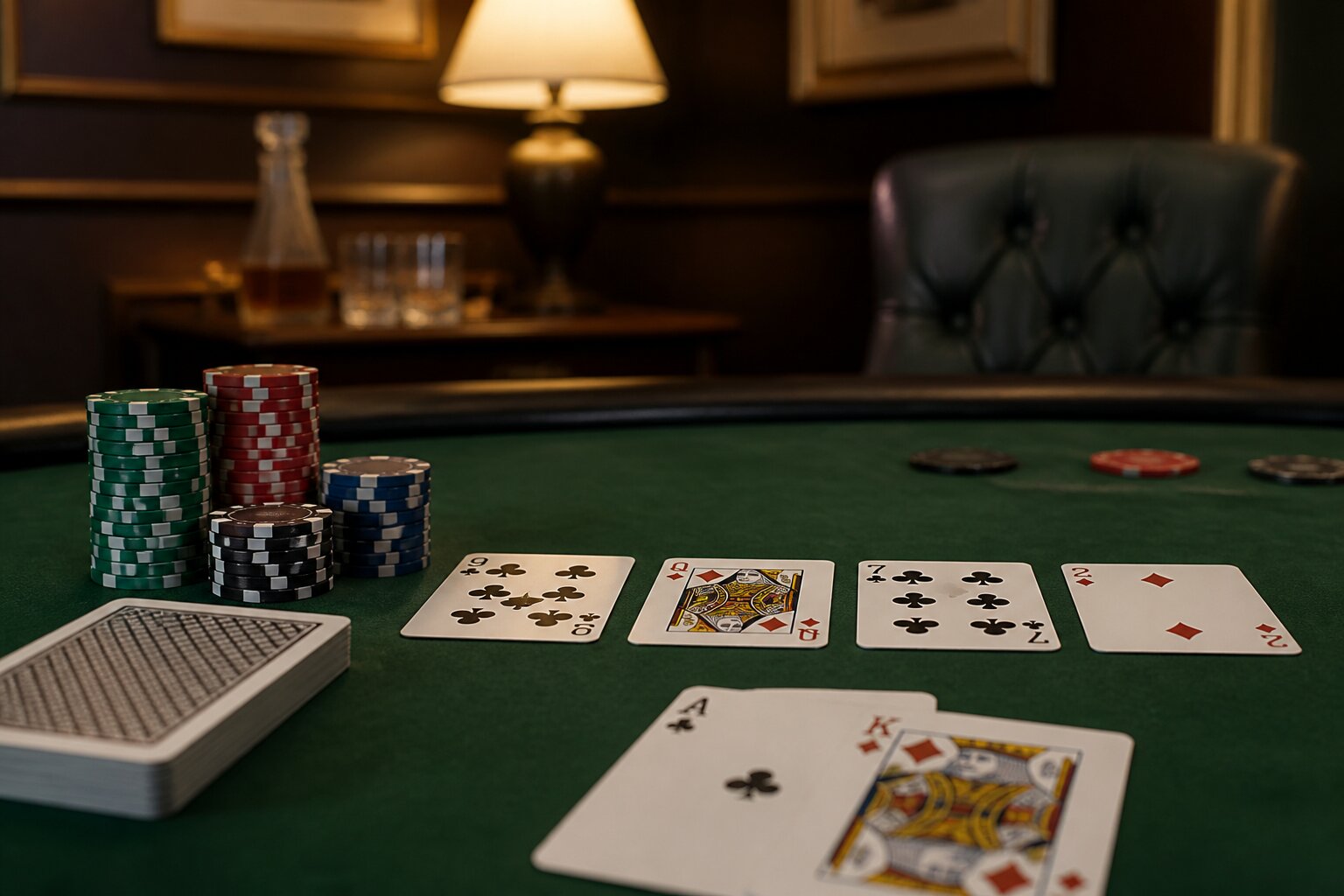
Short Deck Poker brings a fresh twist to familiar poker play, offering quicker hands and different strategic choices. If you know Texas Hold’em, many elements will feel recognisable, though a few key rules shift the game’s balance.
This guide explains what makes Short Deck different, how the rules change hand values and gameplay, and what to look out for when joining a table. Read on to learn the essentials and get a clear picture of how to approach the game.
What Is Short Deck Poker?
Short Deck Poker, also called Six Plus Hold’em, is a modern variant of Texas Hold’em that first became popular in high-stakes circles before spreading into casinos and online rooms.
The defining change is the deck: all the 2s, 3s, 4s and 5s are removed, leaving 36 cards. That reduction affects the distribution of hands and changes how frequently particular combinations appear, so some hands become more or less valuable compared with standard poker.
Gameplay still revolves around two private cards and five community cards, with familiar betting rounds. Those small differences in deck composition and hand rankings create new strategic considerations, which is why both new and experienced players find Short Deck engaging.
How Does Short Deck Poker Differ From Traditional Poker?
The most obvious difference is the reduced deck size. With the low cards removed, the likelihood of certain hands changes; this alters both the frequency of strong hands and the relative strength of specific combinations.
Because there are fewer low cards, straights and sets tend to appear more often, while flushes become rarer. To reflect that shift, many Short Deck formats rank a flush above a full house. The wheel straight also changes: the smallest straight possible becomes A-6-7-8-9 rather than A-2-3-4-5.
Beyond these adjustments, the betting structure, positions and sequence of play mirror Texas Hold’em. Those familiar points make it straightforward to learn, but the altered odds demand refreshed tactics.
What Are The Rules Of Short Deck Poker?
Short Deck follows the broad outline of Texas Hold’em but includes a few important rule differences worth noting.
Deck setup: play uses a 36-card deck with all 2s, 3s, 4s and 5s removed. The cards now run from 6 through Ace.
Blinds or antes: tables may use the familiar small and big blind arrangement, or they may require an ante from every player before each hand. Some games also have an additional ante posted by the dealer button to stimulate action.
Dealing and betting: each player receives two private cards. The community-board rounds remain pre-flop, flop (three cards), turn (one card) and river (one card), with a betting round after each.
Hand rankings: the reduced deck changes certain values; commonly, a flush outranks a full house and the lowest straight is A-6-7-8-9. Variations exist, so always confirm the house rules.
Showdown: after the final betting round, remaining players reveal their hands and the best five-card combination according to Short Deck rankings wins the pot.
These rules preserve the familiar flow of Hold’em while introducing nuances that change hand selection, positioning and bet sizing.
Which Poker Hands Are Changed In Short Deck?
Hand rankings shift principally because of how card removal affects the likelihood of certain combinations.
The most notable change is that flushes become more valuable relative to full houses, since fewer suited cards remain in the deck. As a result, five suited cards typically beat three-of-a-kind plus a pair in many Short Deck variants.
The configuration of the lowest straight is also altered. With 2–5 removed, the minimal straight uses Ace and the 6–9 sequence, so A-6-7-8-9 is the smallest straight available.
Other hands—four-of-a-kind, straight flush and royal flush—retain their relative positions, but their probabilities shift. These differences influence pre-flop hand selection and the way players interpret board textures during the later streets.
How Do You Play A Hand Of Short Deck Poker?
A hand unfolds much like Hold’em, starting with two private cards for each player and the posting of blinds or antes. Players then respond to those initial stakes through calls, raises or folds.
The flop reveals three community cards, which often produce more coordinated boards than in full-deck play because of the missing lower ranks. That tends to increase the frequency of made hands and strong draws, so decisions on the flop can be more consequential.
After the turn and the river are dealt—each followed by betting—remaining players reach the showdown. The winner is the player with the best five-card hand under the Short Deck ranking in use at that table.
Throughout a hand, players must weigh the altered hand probabilities against position and bet sizing; the streamlined deck compresses equity swings and can make speculative plays pay off differently than in standard Hold’em.
How Are Blinds And Betting Structured In Short Deck?
Short Deck tables commonly adopt either the blind system familiar from Hold’em, or an ante format where every player contributes before the hand begins.
When blinds are used, the small and big blinds function as forced bets to stimulate action. In ante games, uniform contributions raise the effective pot size and often encourage more multi-way pots, changing both early position strategy and the value of speculative holdings.
Betting rounds retain the same options—check, bet, call, raise or fold—but the prevalence of antes can lead to larger average pots and more aggressive play. Before joining a table, it’s sensible to note whether the game uses blinds or antes, because that affects starting-hand value and overall risk exposure.
Can You Play Short Deck Poker Online In The UK?
Short Deck Poker is available online in the UK at regulated operators. These sites follow strict rules designed to protect players and ensure game integrity.
When you play online, the platform handles shuffling and dealing, and play tends to be faster than at a live table. The online environment also commonly provides tools to help players manage their activity, such as deposit limits and time-out options, which are useful for keeping play within personal boundaries.
Whether you prefer online convenience or the pace of a live game, make sure the operator’s rules and the Short Deck variant being used match what you expect before you sit in.
Are There Differences Between Online And Live Short Deck Poker?
The core mechanics are the same across online and live play, but the experience diverges in a few practical ways.
Online poker moves more quickly and automates routine tasks like chip counts and bet sizing, which can sharpen the pace of tournaments or cash games. Live play offers more opportunity to read opponents’ timing and behaviour, and the social element can influence decision-making in ways that aren’t present online.
Rules and hand-ranking variants are easy to confirm online through a site’s help pages, while in a live setting it’s wise to check the house rules at the table. Both formats reward adaptation to the altered odds and the specific styles of the opposition.
Common Short Deck Poker Myths Examined
Short Deck has attracted misconceptions that can lead to poor decisions if taken at face value. Addressing the most common myths helps clarify how to approach the game sensibly.
Myth: Short Deck Poker Is Just Regular Poker With Fewer Cards
The structure resembles Hold’em, but the change in deck composition affects hand frequencies and strategic priorities. Players must recalibrate which hands are worth playing and how they respond to certain board textures.
Myth: The Game Is Easier Or Guarantees Bigger Wins
No poker variant guarantees outcomes. Short Deck shifts odds and alters the value of holdings, so effective play depends on understanding those changes and adjusting strategy accordingly.
Myth: There’s Only One Set Of Short Deck Rules
Rules and hand-ranking conventions may vary between rooms or operators. Confirming the specific rules at a table prevents misunderstandings during play.
Clearing up these myths helps set realistic expectations and supports a better, more informed experience at the table. Ultimately, knowing how Short Deck differs—and how those differences affect choices at each stage—gives you the best chance of making sound decisions.
**The information provided in this blog is intended for educational purposes and should not be construed as betting advice or a guarantee of success. Always gamble responsibly.