Fancy mixing up your usual blackjack routine? Blackjack Switch offers a fresh take by letting you play two hands and swap cards between them, which brings more strategic choices into each round.
If you want a clear, practical explanation of how it differs from classic blackjack, how the switching option works and what to watch for with side bets and payouts, this guide covers it all. It’s written so you can quickly pick up the essentials and understand what to expect at the table.
Keep reading for rules, examples and useful pointers that will help you decide whether Blackjack Switch is a good fit for your play style.
What Is Blackjack Switch?
Blackjack Switch is a variation of traditional blackjack where a player receives two separate hands and may exchange the top card between them after the initial deal. This option changes the usual decision-making: instead of managing one hand, you evaluate two and consider combinations that improve overall outcomes.
The core objective remains the same — form hands closer to 21 than the dealer’s without going over — but the switching rule and a few altered payouts make the game distinct. Casinos balance the extra player option with rule tweaks so the game remains competitive for both sides.
Regulated venues apply consistent standards to the game, with clear rules and published paytables so you know how a given variant handles dealer 22s, blackjack payouts and side bets.
How Does Blackjack Switch Differ From Classic Blackjack?
Both games aim to beat the dealer by forming better hands, but several features set Blackjack Switch apart.
The most notable is the card-switching option: after receiving two cards for each hand you can swap the top cards to form stronger combinations. That single rule adds strategic depth because you now consider the combined potential of both hands, not just each hand in isolation.
To offset the switching benefit, other rules are adjusted. Common examples include treating a dealer total of 22 as a push for active hands and paying blackjacks at even money rather than at 3:2. Those changes affect long-term outcomes and are part of why Blackjack Switch should be learned on its own terms rather than treated like classic blackjack.
If you’re curious how the switching choice fits into play, the next section shows the flow of a round and explains the special side bet that often appears alongside this variant.
How Do You Play Blackjack Switch?
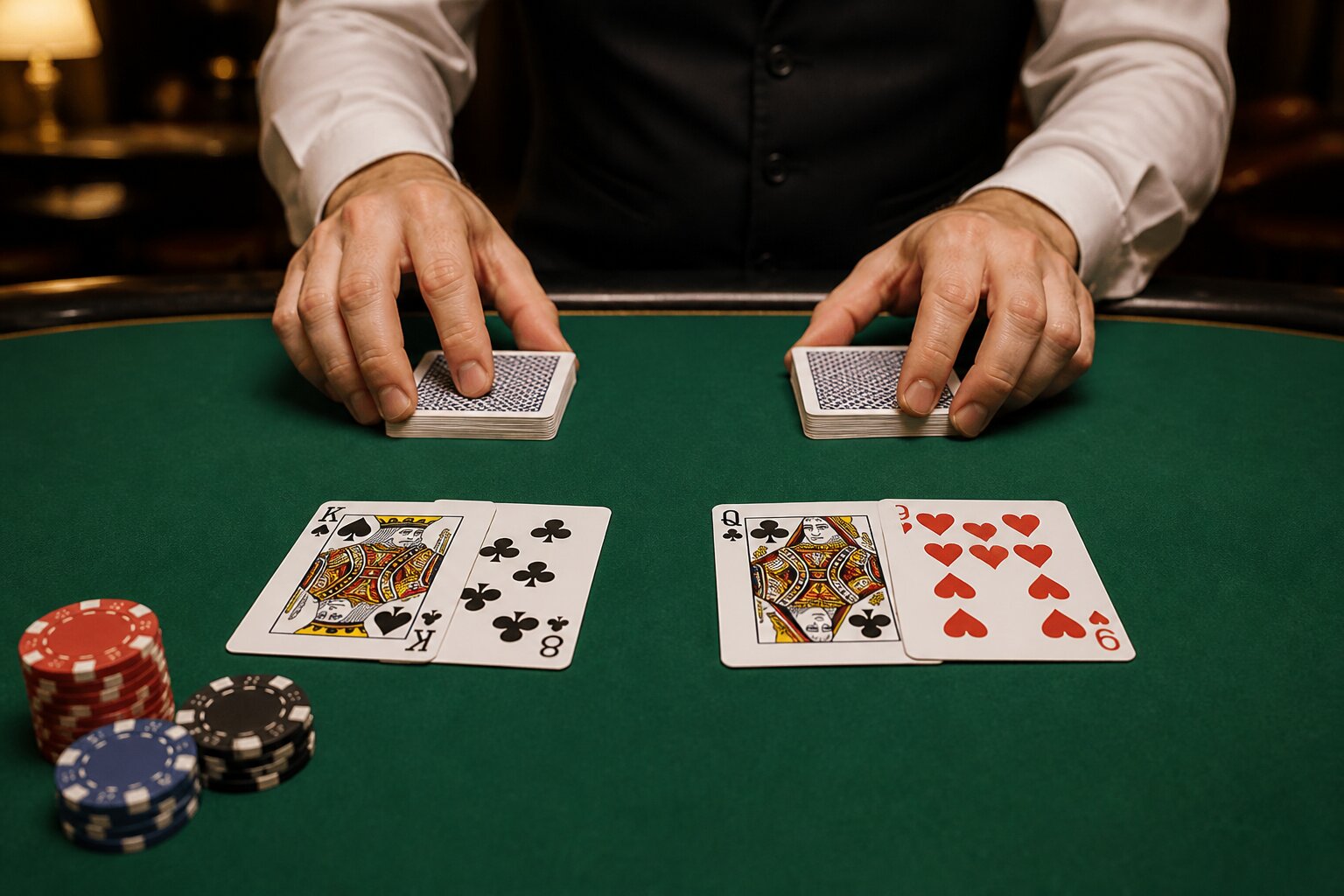
A typical round begins with two equal bets, one for each hand, and both hands receive two cards. The dealer also receives cards following standard dealing procedures. Once the initial deal is complete you decide whether to switch the top cards between your two hands; that choice is made before any further actions like hitting, standing or doubling.
After switching (if you choose to), play proceeds similarly to regular blackjack: you may take additional cards, stand on a hand, or in some rule sets double down. The dealer then completes their hand according to house rules, and outcomes are resolved using the specific payout structure for this variant.
There is also often an optional side bet called Super Match, based on the ranks among the four cards initially dealt to you. It pays according to matching combinations and its own paytable. Because side bets use separate odds from the main game, they should be considered an optional extra rather than an extension of core strategy.
Before playing a new table variant, check the table’s rules and paytables so you understand how dealer 22, blackjack payouts and any side bets will be handled.
The Switching Rule Explained
When your first two hands are dealt you can swap the top card of one hand with the top card of the other. For example, if your hands are 10–7 and 9–6, swapping the tens might create 10–6 and 9–7, which could improve your chances across both hands. The switch is a single decision made after the deal and before you take any hits or doubles.
Deciding whether to switch involves weighing potential improvements for both hands. A switch might convert two mediocre hands into one strong hand and one weak hand, so the choice depends on your tolerance for risk and how you expect the dealer to play out their hand.
Understanding the Super Match Side Bet
Super Match is an optional bet resolved from the first four cards you receive. Typical winning patterns include pairs, three-of-a-kind and four-of-a-kind, each paying according to the game’s paytable. Because this wager is independent of play decisions after the deal, it’s resolved immediately and does not affect the main hands.
Side bets generally carry higher house edges than the main game, so treating them as occasional extras rather than core strategy keeps expectations realistic. If you choose to place the Super Match wager, take a moment to review its payouts so you know exactly what combinations are rewarded.
Blackjack Switch Rules UK Players Should Know
If you’re playing Blackjack Switch in the UK, several rules commonly apply and are worth noting before you play.
There are two hands only, and bets on both must be equal.
The switching option is available only after the initial deal and only for the top cards.
If the dealer’s total is 22, active player hands (other than natural blackjacks) are usually treated as a push, returning the stake.
Blackjack typically pays 1:1 in this variant, not 3:2.
Side bets such as Super Match follow their own paytables and rules.
Regulated casinos display clear rules and paytables so you can confirm how a specific table implements these points.
Those variations affect strategy and payouts, so check the table rules where you play. If anything seems unclear, table rules or game-help pages will give the definitive guidance for that specific version.
Can You Play Blackjack Switch Online?
Blackjack Switch is widely available in online casinos as both a standard RNG version and as a live-dealer game. The live format mirrors a physical table with a real dealer and can be played through a video stream, while the RNG version uses software to deal and resolve hands quickly.
Online tables may present slightly different paytables or limits, so it’s worth checking the variant details before joining a game. Playing online also gives easy access to rules and the paytable for the specific table, which helps when comparing versions or trying a new variant for the first time.
If you prefer the social aspect of a live table or the speed of RNG play, both options offer the same core switching mechanic; your choice depends on the experience you want.
Common Myths About Blackjack Switch
There are a few recurring misconceptions about Blackjack Switch. Clearing these up helps set realistic expectations.
Myth 1: Switching guarantees a win
Switching can improve hands, but it does not ensure success. Outcomes depend on the cards dealt, dealer play and the rules in place.
Myth 2: Side bets are always worth it
Side bets add variety, but their odds are different from the main game and typically less favourable over time. Treat them as optional entertainment.
Myth 3: Online games aren’t fair
Licensed operators use independently tested systems and publish paytables; regulated games are monitored to ensure they meet required standards.
Myth 4: There’s a secret system that always wins
No method removes the inherent variability in card distribution. Skillful choices matter, but they operate within the constraints of the game’s rules.
Understanding these points helps you approach Blackjack Switch with a clear, practical mindset rather than chasing unrealistic promises.
Is Blackjack Switch Fair & Safe To Play?
When played at regulated venues, Blackjack Switch is subject to oversight that requires transparent rules, published paytables and independent testing of the dealing systems. These measures are intended to ensure fair operation and accurate outcomes.
Game fairness also comes down to knowing the specific rules for the table you choose, since small differences in payouts or dealer procedures change how hands resolve. Reading the paytable and rules before you start gives a reliable picture of expected behaviour.
Player protections vary by operator but commonly include account controls and access to information about gambling limits and support services. Keep those features in mind when picking where to play so your experience is clear and well managed.
Blackjack Switch House Edge & Payouts
The house edge in Blackjack Switch reflects both the switching option and the rule adjustments that balance it. Typical figures are in the region of 0.6% to 0.7% under common rule sets, but this can vary with differences in payouts and the handling of dealer 22s.
Winning hands pay even money and natural blackjacks are usually paid at 1:1 in this variant. Side bets such as Super Match have separate payout structures which should be checked on the game’s paytable. Comparing paytables across tables is a practical way to see how rules affect expected returns.
Knowing these figures helps set realistic expectations: the house edge describes long-term averages, not individual sessions, so treat play as entertainment rather than a reliable way to generate income.
Tips For Enjoying Blackjack Switch Responsibly
Blackjack Switch can be engaging without becoming a problem when you use a few simple approaches to manage play and stay in control.
Set personal limits for time and spending before you start, and use available account tools to enforce them.
Take regular breaks to keep decisions clear and avoid prolonged sessions.
If play becomes stressful, consider a pause or use cooling-off features provided by operators.
Access confidential support services if you have concerns about gambling; help is available through national support organisations.
These practical steps keep play enjoyable and manageable. If you want to try Blackjack Switch now, join a table with rules you’ve reviewed and play within the limits you set.
**The information provided in this blog is intended for educational purposes and should not be construed as betting advice or a guarantee of success. Always gamble responsibly.