Fancy a spin of the roulette wheel but not quite sure what happens when that elusive green zero, or double zero, lands? You’re not alone.
Whether you’re playing European or American roulette, understanding what payouts you can expect when the ball settles on 0 or 00 helps you make clearer decisions at the table. With different table layouts, odds and bet types, the details matter.
If you’ve ever wondered whether betting on zero is worth it, or simply want to know how much you could win, you’re in the right place. Read on to follow how these pockets work and what they mean for your bets.
What Are 0 and 00 in Roulette?
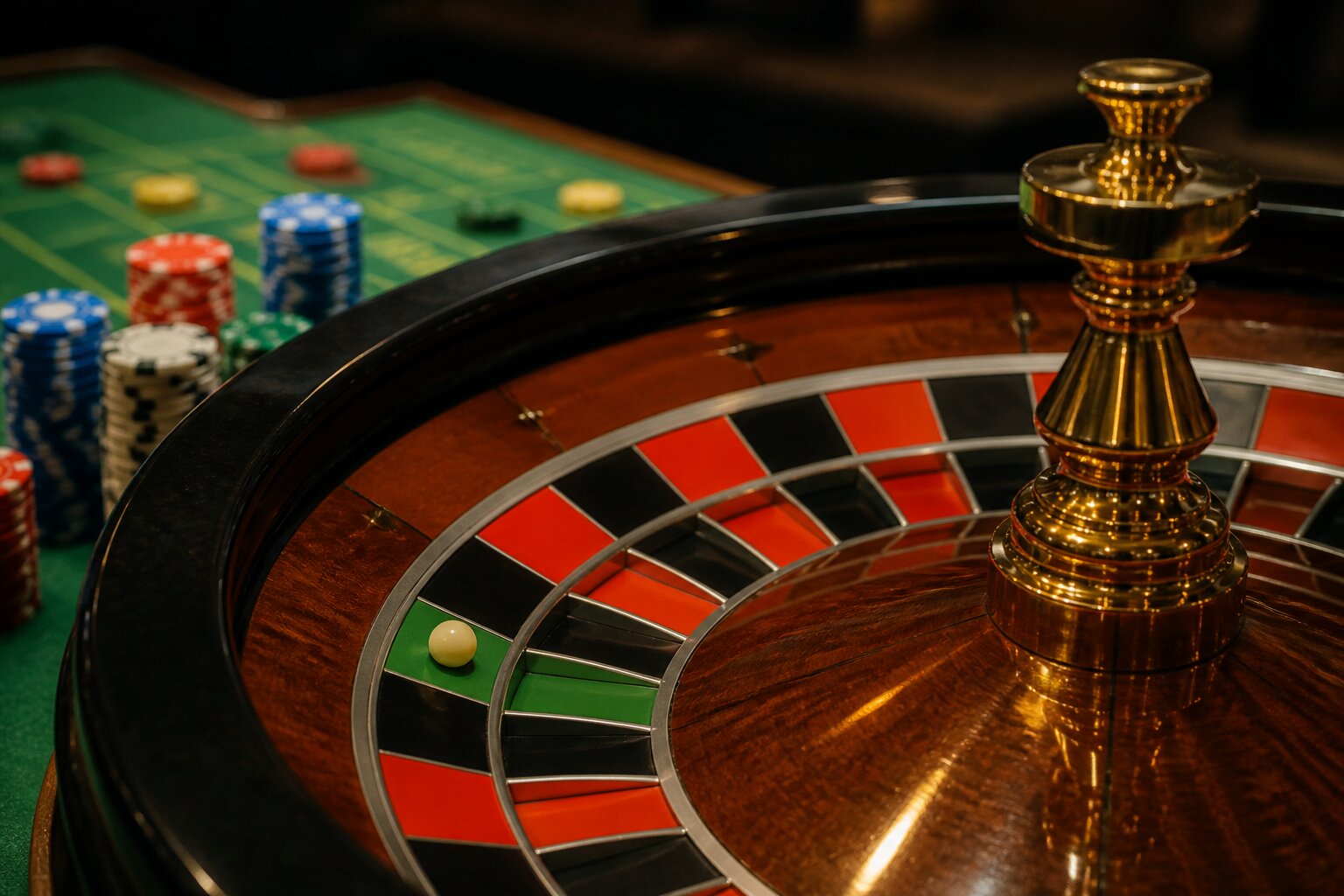
In roulette, the numbers 0 and 00 are the green pockets on the wheel. They are distinct from the red and black numbered pockets and have a special role in the game.
European wheels have a single zero (0), while American wheels include both zero (0) and double zero (00). These differences alter the total number of pockets and therefore change the probabilities for each spin.
These pockets affect results because when the ball lands in 0 or 00 most standard bets lose unless those bets specifically include the green pocket. Examples of bets that can win on the green pockets include placing a straight-up bet on 0 or 00, or certain special group bets that explicitly cover them.
That is how the house retains its statistical advantage: the extra numbered pockets change the relationship between bet types and their real odds. With one zero the house edge is lower than with two zeros, which is why many players prefer European-style wheels for the improved odds.
Knowing which wheel you are playing on and where the green pockets sit is the first step to understanding how payouts and chances interact. Always check the table rules before you play so you understand which pockets are in use and how they affect potential returns.
How Are Payouts Calculated for 0 and 00?
A bet placed directly on 0 or 00 is called a straight up bet. The standard payout for a successful straight up is 35 to 1. So, a £1 stake returns £35 in winnings plus your original £1, giving a total of £36.
On American roulette there is also the top line, or basket, bet that covers 0, 00, 1, 2 and 3. Because it covers more numbers, its payout is lower, typically 6 to 1 for a win.
Only bets that include the green pocket win when the ball lands there; all other wagers are settled as losses for that spin. Before you place chips, it is sensible to check the table layout and confirm which bets and payouts are offered at that table.
What Happens When You Bet on Zero?
Placing a chip directly on zero is a straight up bet on that single pocket. If zero comes in, the payout is 35 to 1. For example, a £2 stake would return £70 in winnings plus the original £2 back, totalling £72.
If zero does not appear, that stake is lost like any other losing number bet. This type of bet pays well when it wins because it covers only one outcome, but that also means wins are relatively infrequent.
Keep your own limits in mind and play within them. Treating stakes as part of an entertainment budget helps keep the experience straightforward and controlled.
Transitioning from how payouts work, it is useful to see how the wheel variant changes those chances.
Zero Payout Differences: European vs American Roulette
Both European and American roulette pay 35 to 1 on a straight up bet for a single numbered pocket, including zero. The crucial difference lies in the number of green pockets and how that affects overall odds.
European roulette has a single zero, while American roulette includes an extra double zero. The additional pocket on the American wheel increases the house edge by changing how frequently any given number, including zero, will come up over many spins. That does not alter the 35 to 1 payout, but it does change the probability of winning such a bet in the long run.
Understanding which wheel you are facing clarifies the balance between potential winnings and the underlying odds.
House Edge and Its Impact on Zero Bets
The house edge is the built-in advantage the casino holds over time, expressed as a percentage. In practice, the extra pocket on American wheels raises that percentage slightly compared with a single-zero wheel. For players this means identical bets will, on average across many spins, return less on American tables than on European ones.
The payout structure stays the same, but the changed proportion of winning to losing outcomes is what alters the expected result over many plays.
When choosing a table, that difference is an important factor to bear in mind.
Bet Types That Involve Zero: Explained
There are several ways to include zero or double zero in your bets, each covering a different number of outcomes and offering different payouts. Below is a clear overview of the main types you will encounter.
A straight up bet places a chip directly on 0 or 00 and provides the highest single-number payout.
A split bet shares a chip between two adjacent numbers, such as 0 and 1 on European layouts; it lowers the payout but gives two chances to win with one stake.
Some tables offer a street bet covering three numbers including zero, and a corner bet that may include a block of four numbers which can incorporate zero on certain layouts.
On American wheels the basket, or five-number bet, covers 0, 00, 1, 2 and 3 and has its own lower payout because it covers more numbers.
Choosing between these depends on whether you prefer the smaller chance of a higher payout or a broader coverage with smaller returns, and on how those choices sit within your spending limits.
Does Zero Change Your Chances of Winning?
Zero and double zero influence the odds of many bet types. Their presence adds outcomes that are not covered by even-money bets like red or black, which reduces the probability those bets will win compared with a simple two-outcome model.
This difference is why the house retains its edge: adding one or two green pockets shifts the relationship between bet size, payout and expected return. Each spin is an independent event governed by chance, so the probability for a particular outcome on any given spin remains based on the wheel’s layout.
Understanding how the wheel’s pockets affect odds helps set realistic expectations about how often different bets might pay out over time.
Transitioning from probabilities to beliefs, it is worth examining the common ideas that circulate about zero.
Common Myths About Zero in Roulette
Several myths surround zero, and clearing them up makes it easier to approach the game with accurate expectations.
One persistent belief is that zero is more or less likely to appear because of past results. In reality, previous spins do not influence future outcomes; the probability for each spin is determined by the wheel configuration and remains independent.
Another myth suggests that betting on zero is a secret path to big wins. While the payout for a single-number win is high, that does not change the underlying probability of that number coming up. The high payout compensates for covering only one outcome.
Finally, some think that once zero appears it becomes less likely to return soon after. Statistically, each spin starts with the same distribution of possible outcomes, so there is no short-term pattern to exploit.
Clearing up these misconceptions helps keep expectations straightforward and focused on the mechanics of the game rather than on false strategies.
Are There Any Special Bets for Zero?
Beyond standard wagers, certain special bets let players include zero in a clustered way, often used in European style play or at live tables where bespoke bets are accepted.
Zero Spiel, sometimes called the zero game, covers zero and several neighbouring numbers on the wheel. This type of bet targets a cluster rather than an isolated pocket and is offered on specific layouts.
A neighbours bet places stakes on zero plus a set of numbers directly adjacent to it on the wheel, typically covering two numbers on each side. It spreads coverage across a small sector of the wheel in a single bet.
These options add variety for players who want different risk profiles, but they remain governed by the same payout-versus-probability trade-offs as standard bets. Choose them only if they fit your preferred style of play and budget.
Play with clear limits and focus on the mechanics that interest you; that keeps the experience enjoyable and well managed.
**The information provided in this blog is intended for educational purposes and should not be construed as betting advice or a guarantee of success. Always gamble responsibly.