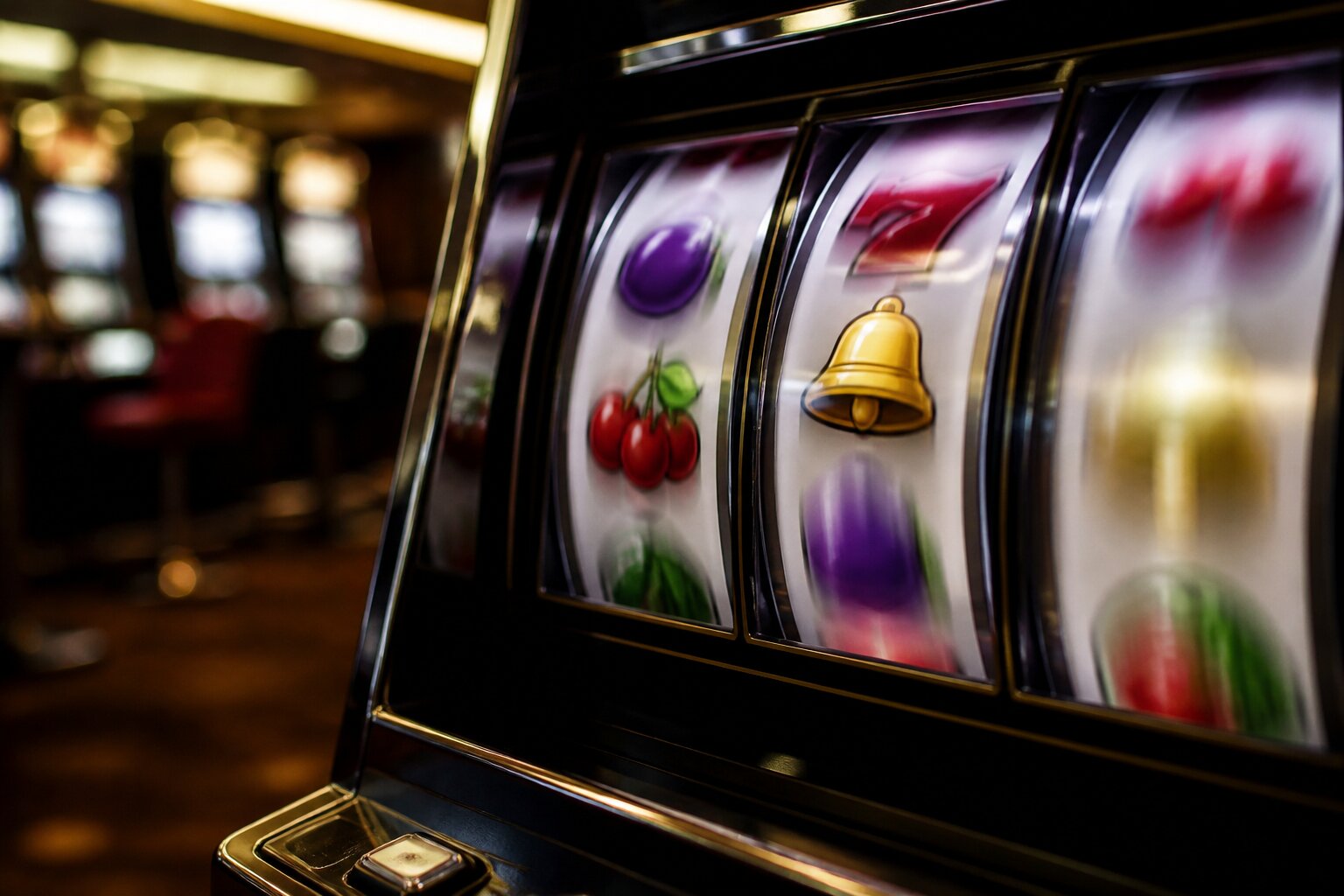
Ever spun the reels at your favourite online slot and wondered how often a win is meant to land? That little buzz when the symbols line up comes from the game’s design, not from any outside force — it reflects the slot’s hit rate, also called hit frequency.
Hit rate is a simple statistic that gives a sense of how often a spin will produce a win of any size. Some games deliver regular small wins, while others favour rarer, larger payouts. Understanding this can make watching the reels more engaging and help you pick a game that suits the way you like to play.
If you want to know what hit rate really tells you about a game and how it relates to volatility and RTP, read on for clear explanations and a short example that shows how the figure is calculated.
What Does Hit Rate Mean in Slot Machines?
Hit rate, also known as hit frequency, is the percentage chance that any given spin will produce a winning outcome. That win might be a small cash return, a feature trigger, or entry to a bonus round. When you see a hit rate like 20 percent, it means that, on average over many spins, about 20 out of every 100 spins produce some form of win.
This figure is an average calculated over large samples. Individual sessions can look quite different because each spin has a random result. The purpose of the hit rate is to describe how often wins occur, not to predict what will happen in a short session. Readers who are curious about how that average interacts with other game statistics will find the next section helpful in understanding how the feel of a game is shaped.
How Hit Frequency Affects Your Slot Experience
Hit frequency shapes the rhythm of a slot. Games with higher hit rates tend to show wins more often, which keeps the action appearing steady and can create a lively playing experience. Those wins are usually small, so the session feels busy but not necessarily lucrative.
Lower hit rates lead to quieter stretches with fewer wins, but those wins are sometimes larger or are tied to bonus mechanics. That pattern creates a different kind of excitement, where extended play may build toward a notable payout. Striking a balance between frequent small wins and occasional larger ones is where volatility comes in, which is explored next.
It is sensible to set personal spending limits and stick to them while playing, keeping the focus on the entertainment the game provides rather than expecting particular outcomes.
Hit Rate vs Return to Player: What’s the Difference?
Hit rate and Return to Player, or RTP, measure different aspects of a slot.
Hit rate describes how often wins occur. RTP expresses the long-term percentage of wagered money that the game will return to players over an extremely large number of spins. For example, a 96 percent RTP means that, in theory, the machine pays back £96 for every £100 wagered when measured across hundreds of thousands of spins.
A game can have a high hit rate but a modest RTP, which happens when wins are frequent but small. Conversely, a low hit rate with occasional big wins can still produce a similar RTP. Neither stat predicts short-term results. The next section shows how volatility ties these ideas together by explaining how wins are distributed in size and timing.
Understanding Slot Machine Volatility
Volatility, sometimes called variance, describes how wins are distributed across play. High volatility games tend to award wins infrequently but can deliver larger payouts when they do. Low volatility games pay out more often, but prizes are usually smaller. Medium volatility sits between those two extremes, offering a mix of regular small wins and occasional bigger ones.
Volatility interacts with hit rate: a high hit rate combined with low volatility will feel steady and predictable in terms of frequent small returns, while a low hit rate paired with high volatility will produce longer dry spells and less frequent but more substantial wins. Players who want a feel for how a game might behave should consider both metrics together rather than focusing on one alone.
With that context in mind, the next brief example shows how hit rate is calculated from actual spins.
Simple Example: Calculating Slot Hit Rate
Imagine a session of 100 spins where 22 spins produce a win of any kind. To calculate the hit rate you divide the number of winning spins by the total number of spins, then convert that fraction to a percentage.
22 divided by 100 equals 0.22, which is 22 percent when shown as a percentage. So the hit rate for that session is 22 percent, meaning a win occurred on roughly one in every five spins during those 100 rounds. Developers determine official hit rates using far larger numbers of spins, often in the thousands or millions, so single-session figures can differ markedly from the reported averages.
This concrete example helps clarify what hit rate measures and primes the discussion about whether a higher hit frequency actually leads to larger returns.
Does a Higher Hit Frequency Mean More Wins?
A higher hit frequency means wins show up more often, but not necessarily that a player will finish ahead. Frequent wins are often small and may not cover the total amount wagered over a session. For instance, a slot with a 32 percent hit rate might produce many modest payouts, such as 30p or 40p on a £1 spin, which feel rewarding in the moment but may not accumulate into a net gain.
Slots with lower hit frequencies tend to concentrate value into fewer, larger payouts. A 10 percent hit rate might mean wins arrive only occasionally, but those wins can be more significant. Ultimately, whether a session results in a net gain or loss depends on many factors, including bet size, RTP, and the distribution of win amounts described by volatility.
Why Is Hit Rate Important for Slot Players?
Knowing the hit rate helps players choose games that match their preferred pace and risk profile. If frequent small wins are appealing, selecting higher hit rate, lower volatility titles will produce that experience. If the preference is for less frequent but potentially larger payouts, a lower hit rate with higher volatility will align better.
Understanding hit rate also removes some mystery from how a game feels while playing. Rather than expecting specific outcomes, players can use these statistics to set expectations and select games that suit their style, keeping play enjoyable and aligned with personal limits. With that in mind, you can now approach slot choices with a clearer idea of how often wins tend to appear and how they might be distributed throughout a session.
Play Online Slots at Online Bingo
We’d love to welcome you into our friendly community of players at Online Bingo, where you can enjoy all the entertainment of casino games with us. Whether you’re new to online gaming or already know your way around, everyone’s invited to join in the fun.
It’s simple to get going: just create an account, make a deposit and you can start exploring everything our site has to offer. We hope to see you with us soon.
**The information provided in this blog is intended for educational purposes and should not be construed as betting advice or a guarantee of success. Always gamble responsibly.