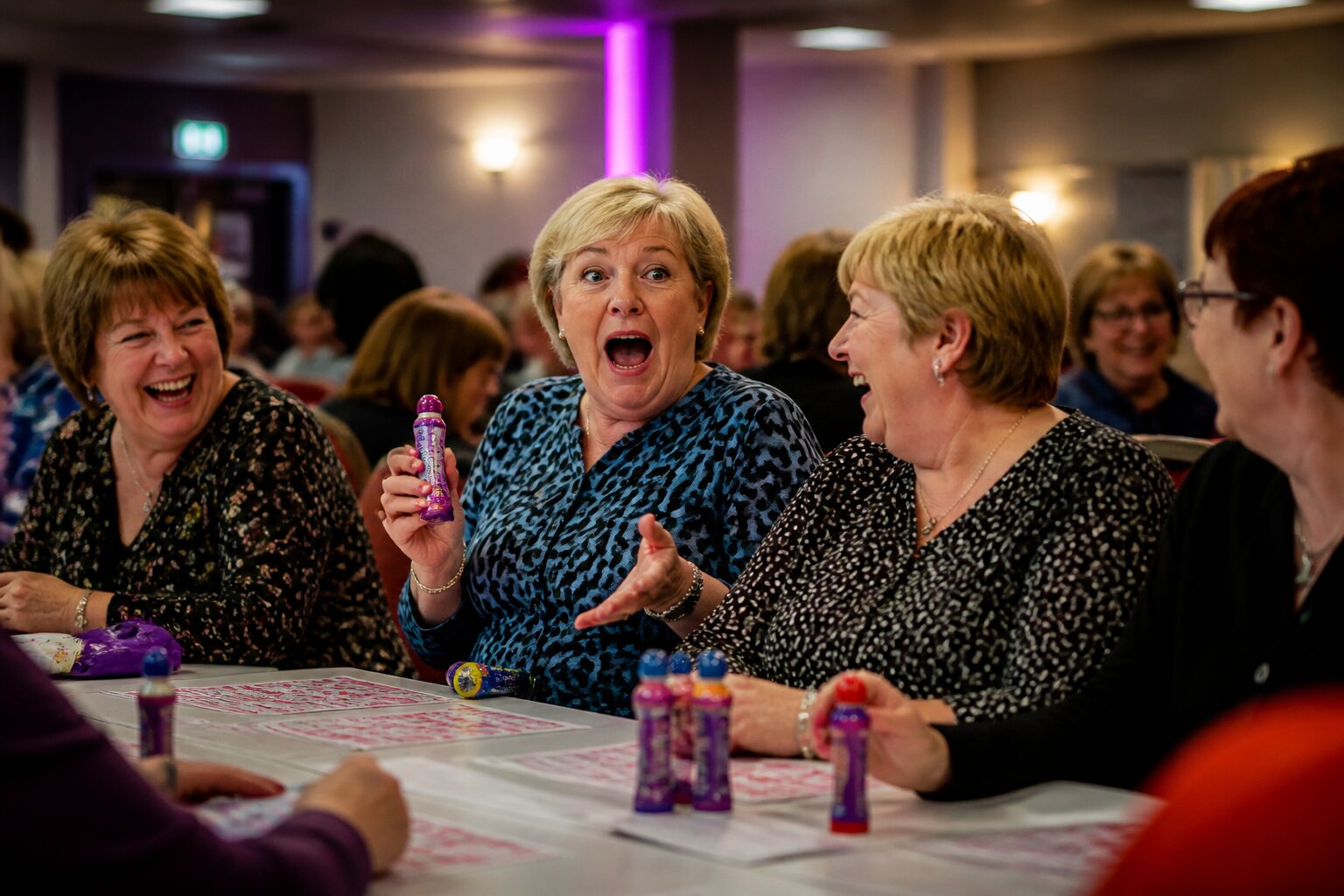
Bingo has been a British favourite for generations, but it’s not just about shouting “house!” anymore. Halls and online rooms now brim with cheeky, modern bingo calls that are as much about the banter as the numbers.
If you expect a quiet game, think again—classic rhymes sit alongside saucy one-liners and pop-culture references, giving every session its own personality. Fancy finding out which phrases make people laugh or what newer slang is doing the rounds? Keep reading for a lively selection that’ll liven up your next game.
Ready to join the fun? Scroll down for a mix of established and contemporary calls—with context to help you understand where they came from and why they still get a reaction.
What Are Bingo Calls And Why Are They Used?
Bingo calls are short phrases, rhymes or jokes that stand for each number in the game. Rather than just announcing a number, a caller might say “Kelly’s Eye” for one or “Legs Eleven” for 11, giving the game an extra layer of entertainment.
These calls have practical and social functions. They help players remember numbers more easily and provide a rhythm that keeps everyone engaged. Over decades, patterns from Cockney rhyming slang, wartime expressions and local culture fed into the repertoire, so many calls carry a bit of history as well as a grin.
Importantly, calls create shared moments. They give players something to respond to and remember, turning an otherwise solitary task of marking cards into a communal experience.
How Did Funny & Rude Bingo Calls Become Popular In The UK?
Banter has always been part of British social life, and bingo provided a natural stage for it. When bingo halls spread across towns in the mid-20th century, callers began adding humour to keep the crowd entertained and the game moving.
As radio and television popularised jokes and catchphrases, callers borrowed lines and adapted them for the bingo floor. Over time, what began as simple rhymes grew into a catalogue of cheeky and irreverent calls—some gently risqué, some pointedly witty—pushed along by callers who enjoyed crafting a reaction.
This playful atmosphere stuck. Today’s callers still draw on that theatrical tradition, blending nostalgia with fresh references so each session feels familiar and new at the same time.
Modern Bingo Slang: What’s Changing Today?
Language moves with culture, and bingo slang is no exception. New phrases now reflect social media, TV, music and current events, so references that resonate with many players keep being added.
Online play has accelerated the change. With contributors from across the country, new ideas spread quickly and callers experiment with contemporary lines that appeal to mixed-age audiences. The focus tends to be on inclusivity and relevance—phrases people recognise, sing along to or smile at, even if they’re not long-time players.
That said, the aim remains the same: make the session feel social and entertaining while keeping the calls clear enough for everyone to follow.
The Funniest Bingo Calls To Listen Out For
Some calls are timeless because they paint a picture or invite a noisy reaction. Examples commonly heard include “Two Fat Ladies – 88” and “Legs Eleven – 11,” both of which tend to draw a collective response. Others are short and sharp, like “Knock at the Door – 4,” which often gets repeated back in good humour.
Bits of popular culture also crop up in modern lists, whether as playful updates or direct references that most people quickly recognise. These newer lines work best when they connect instantly with the crowd, prompting the same kind of warm, shared response that the older calls do.
What makes a call memorable is how it brings people together in the moment—whether through a shared joke, a wink of recognition, or just a well-timed phrase that breaks the rhythm in a fun way.
The Rudest Bingo Calls: What Do They Really Mean?
Some calls edge toward the risqué, relying on double meanings or old-fashioned innuendo. Those are usually meant to amuse rather than offend, drawing on a tradition of playful teasing. Examples include calls that reference cheeky characters or tongue-in-cheek questions about everyday life.
A few calls refer to historical items or expressions that no longer have the same context, and these can sound odd or out of date now. Where that happens, halls and hosts often substitute fresher lines that keep the spirit but drop the dated reference.
Different groups have different tolerance levels for this style of humour, so venues tend to adapt their repertoire to suit the audience and keep the atmosphere friendly. If a phrase ever feels uncomfortable, callers and organisers can adjust to ensure everyone enjoys the session.
Where Can You Hear These Bingo Calls In The UK?
You’ll hear classic and contemporary calls at traditional bingo clubs and in live online rooms. Traditional halls offer the theatre of a live caller and the shared noise of a crowd, while online sites recreate that atmosphere through hosts and chat functions.
Playing with a licensed, regulated operator helps protect players and keeps sessions fair. Many venues make it clear how they manage behaviour and language, so you can choose places known for a welcoming atmosphere and straightforward rules.
Whether you prefer stepping out to a hall or joining from home, there’s usually a style of game to match the kind of banter you enjoy.
How To Join In With Modern Bingo Banter
Joining the conversation is simple: listen, respond and enjoy the shared humour. In halls, that might mean answering a call with a laugh or a knowing shout; online, chat features let you react or post a clever line without interrupting play.
If you have a phrase you think would work well, most hosts welcome suggestions provided they’re suitable for the audience. The best contributions are short, easy to hear and spark a smile rather than a long discussion.
Remember that sessions are for adults only. Keep your comments appropriate for the venue and fellow players, and be mindful of the tone of the room so everyone can enjoy the game.
Are Any Bingo Calls Considered Offensive Or Outdated?
Language changes, and some calls once seen as harmless now feel insensitive. Callers and organisers take note when phrases stop landing in the way they used to, and many places have updated their lists accordingly.
When a call has historical context that no longer fits modern sensibilities, it’s common to replace it with something contemporary that keeps the rhythm but removes the problem. This helps keep the game welcoming to players from different backgrounds and ages.
Change is usually gradual and community-led: players, callers and venues discuss what works and what doesn’t, so the evolution of slang tends to reflect what the people playing want.
How Is Bingo Slang Evolving To Be More Inclusive?
Efforts to modernise calls often involve sourcing ideas that resonate broadly and avoiding language likely to exclude people. That can mean drawing on neutral cultural references, everyday observations, or light-hearted themes that most adults recognise.
The result is a safer, more comfortable environment that still keeps the humour and personality callers are known for, while signalling that the space is mindful of its audience.
Final Thoughts On The Evolution Of UK Bingo Calls
Bingo calls are a living tradition: rooted in history but shaped by present-day tastes. They carry both the warmth of shared memories and the chance to surprise players with something new.
Whether you prefer the old favourites or the latest slang, the heart of the game remains the same—people enjoying a moment together. Play where you feel comfortable, be considerate of fellow players, and enjoy the banter that makes bingo uniquely social.
**The information provided in this blog is intended for educational purposes and should not be construed as betting advice or a guarantee of success. Always gamble responsibly.