Few phrases in poker carry as much mystery and drama as the "Dead Man’s Hand." Whispered about in smoky card rooms and immortalised in tales of the Wild West, this infamous hand blends folklore with a grim piece of history.
What exactly is a Dead Man’s Hand, and why has it stayed in the popular imagination for so long? Its story involves a famous shooting, uncertain facts and a simple set of cards that came to mean far more than their value.
Whether you’re a curious poker newcomer or an experienced player, the history and symbolism behind this hand add a new layer of interest to the game. Read on to see how a modest poker combination became one of the game’s best-known legends.
What Is the Dead Man's Hand in Poker?
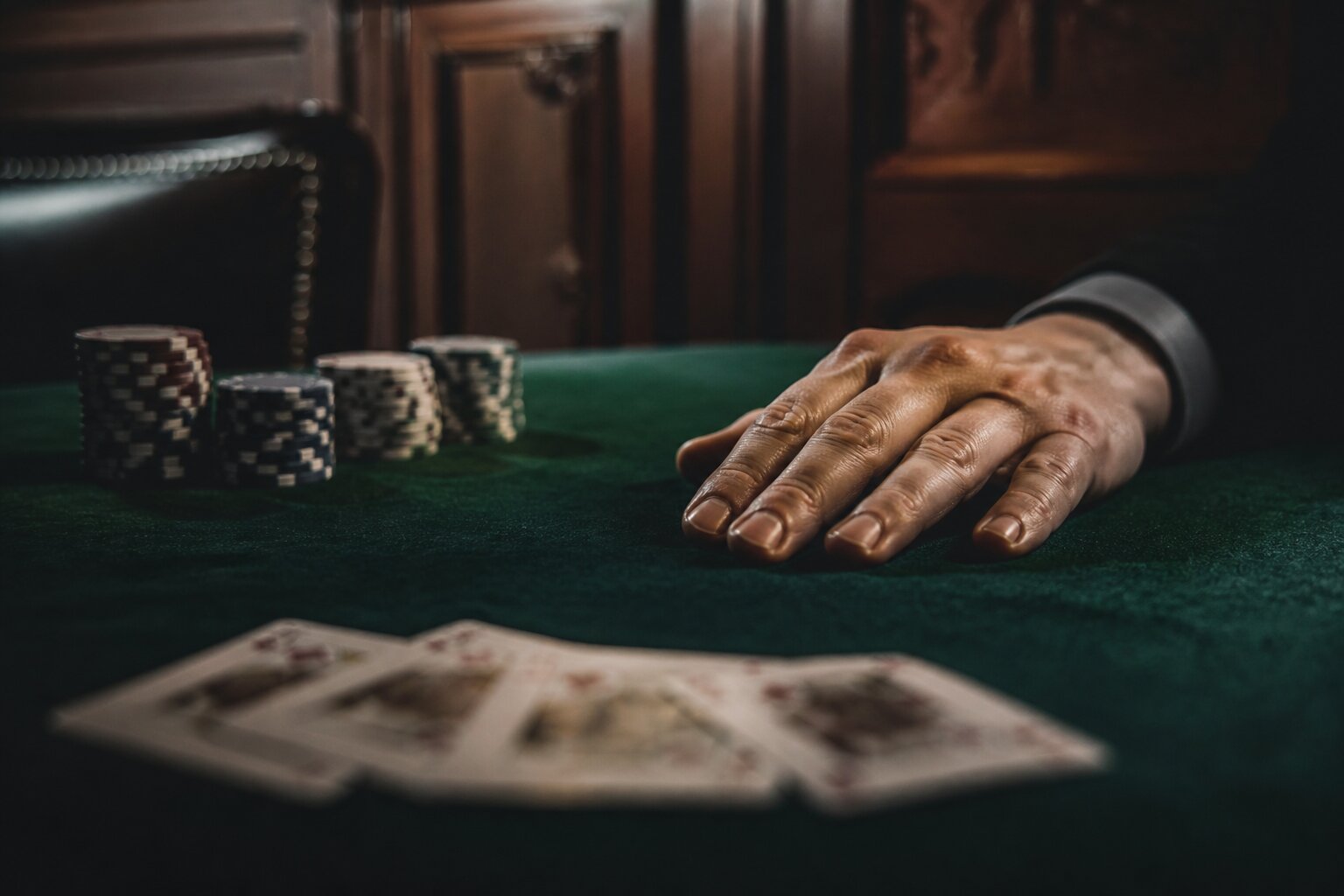
The Dead Man’s Hand is traditionally identified as two black aces and two black eights. Accounts usually leave the fifth card unspecified, and the surviving focus is on those two pairs rather than any particular kicker.
From a gameplay perspective it is not a particularly strong combination in most poker variants. It does not carry any special rules or advantages; its fame comes from the story associated with it rather than from play strategy.
If you are dealt two black aces and two black eights at the table, treat it like any other pair of pairs: assess the board, consider your opponents and decide how the hand fits the situation.
Where Did the Name 'Dead Man's Hand' Come From?
The phrase is tied to an incident in Deadwood, South Dakota, in 1876. The lawman and gambler James "Wild Bill" Hickok was shot while playing poker, and later tellings of the episode attached the image of two black aces and two black eights to his final hand.
Contemporary records from the time do not conclusively list the exact cards Hickok held, and much of the connection emerged in later retellings. That gradual shaping of the story is why historians treat the specifics with caution even as the tale retains its dramatic appeal.
Over the years the name stuck, and the Dead Man’s Hand came to symbolise that moment in the Old West where a game and a violent death intersected in a memorable way.
Why Is the Dead Man's Hand Considered Legendary?
Its status as legend stems from the combination of a notable historical figure, the violent circumstances of his death and the way stories were told afterwards. The image of Hickok’s last hand has been recycled across books, films and folklore, which amplified the association between those cards and the event.
The hand’s notoriety is cultural rather than technical. It is remembered because people have told the story often and with dramatic intent, not because the cards themselves are exceptional in play.
Stories like this show how poker is woven into wider social history; they also demonstrate how a detail from one event can grow into a lasting symbol when retold across generations.
How Has the Dead Man's Hand Influenced Poker Culture?
The Dead Man’s Hand is a recurring motif in media and in the décor of some poker rooms and events. It serves as a visual shorthand for the Old West and for poker’s longer history, appearing in films, television and printed accounts that wish to evoke that era.
Because it carries strong narrative associations, the hand is sometimes used to suggest caution or the unpredictable turn a game can take. This symbolic use is more about atmosphere than strategy, and it helps keep the story alive for new audiences.
The next sections look at what parts of the legend are fact and which grew from later storytelling, so you can separate the documented history from embellishment.
Myths & Misconceptions About the Dead Man's Hand
Stories about the Dead Man’s Hand have picked up additions over time, so some widely repeated claims do not match historical evidence. Here are the most common points of confusion and what we actually know.
Common Myths Versus Historical Facts
Myth: Wild Bill Hickok was definitely holding two black aces and two black eights when he was shot.
Fact: No contemporary, eye-witness account definitively records the exact cards. The association developed in later accounts.
Myth: The Dead Man’s Hand carries a curse or supernatural influence.
Fact: The hand is a cultural signifier created by storytelling. It has no influence over how hands play out at the table.
Myth: The fifth card in the Dead Man’s Hand is always known or meaningful.
Fact: The fifth card has been variously reported and is not consistently documented; the key elements in the tradition are the two black aces and two black eights.
These clarifications help strip the image back to what is likely historical and what is legendary embellishment.
References to the Dead Man's Hand in Popular Culture
Because it evokes a dramatic image, the Dead Man’s Hand appears frequently in films, novels and television dramas set in or inspired by the Old West. Writers and directors use it as a motif to suggest danger, finality or a link to the past.
It crops up in works such as The Man Who Shot Liberty Valance and in period dramas that depict Deadwood and its characters. Authors in other genres have also borrowed the phrase to add an air of mystery or to foreshadow a dramatic turn in a plot.
Outside narrative works, the hand turns up on merchandise, posters and occasionally as insignia in contexts that want to reference bravery or frontier history. These repeated uses help keep the image recognisable to people who may never have played poker.
Is the Dead Man's Hand Considered Fortuitous or Ominous?
Because of its association with Hickok’s death, the Dead Man’s Hand is often presented as ominous in storytelling. In practical terms, though, the cards themselves do not affect how a hand resolves—outcomes depend on the cards in play and decisions made by the players.
It is helpful to view the hand as a symbol: useful for atmosphere and historical reference, but not a predictor of the result at the table. Keeping play decisions grounded in the present situation rather than in stories will always serve a player better.
If you are following poker history because the tales are part of the game’s appeal, that context enriches the experience without changing how the cards function in play.
What Does the Dead Man's Hand Symbolise Today?
Today the Dead Man’s Hand functions as a piece of poker lore that links modern play to a particular moment in nineteenth-century America. For many it stands for the intersection of game and narrative—how a simple hand of cards can become woven into a larger story.
It is sometimes used as an emblem in memorials or insignia, and it continues to feature in cultural works that draw on frontier imagery. Above all, it serves as a reminder of how storytelling shapes our memory of events and how games carry cultural meaning beyond their rules.
Enjoying poker’s history can add texture to the game, and the Dead Man’s Hand is one of those stories that keeps people talking. Please remember that gambling is restricted to adults and should be approached within clear limits and with awareness of the risks involved.
**The information provided in this blog is intended for educational purposes and should not be construed as betting advice or a guarantee of success. Always gamble responsibly.