
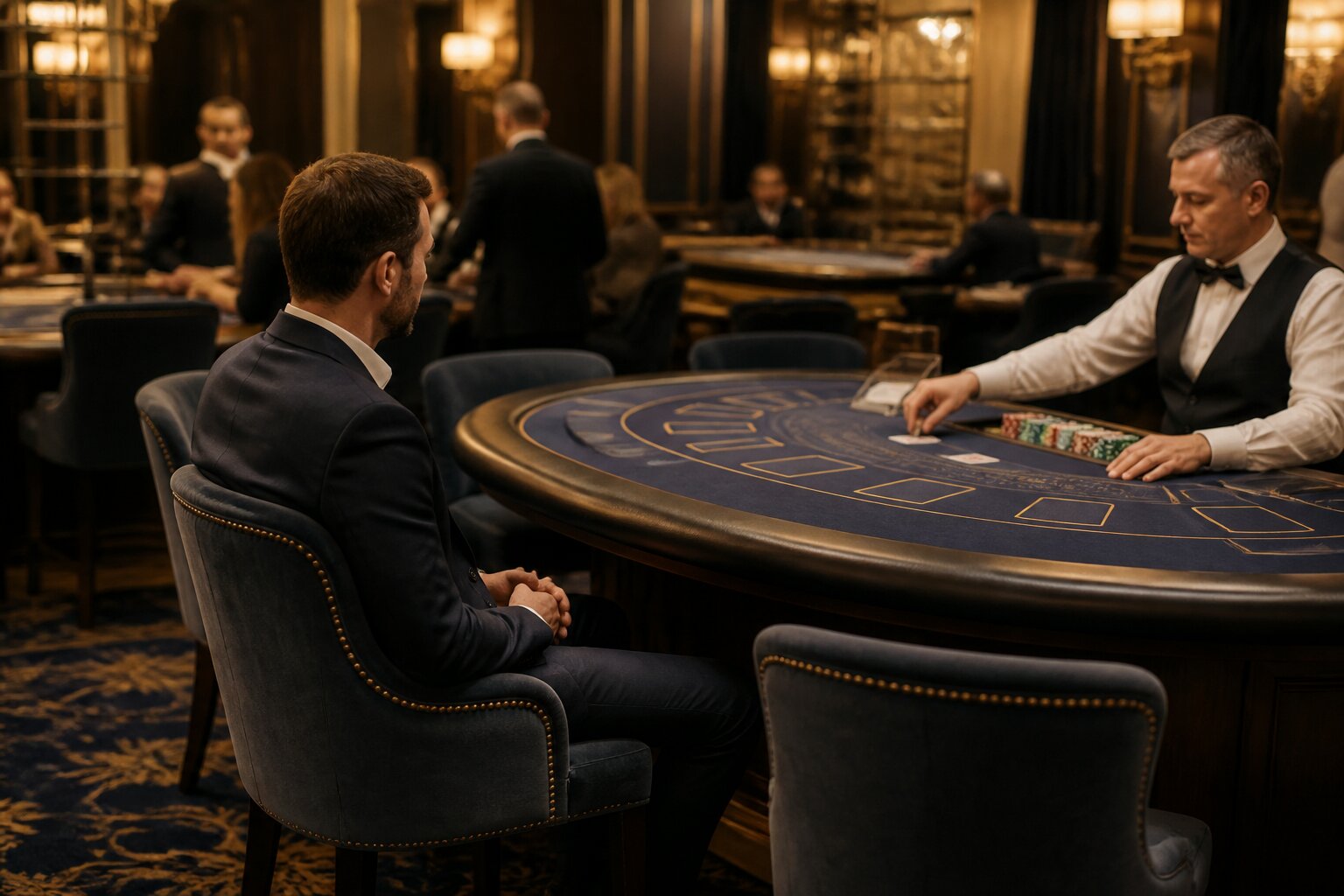
Ever been drawn to a blackjack table just to watch the action, but hesitated because you were not sure what was expected? Many people enjoy taking in the atmosphere and learning the game by observing, yet table etiquette can vary, and a few simple rules will help you avoid awkward moments.
This guide explains what to expect when you want to sit or stand near a blackjack table without taking part. It covers typical house policies, how dealers and players tend to react, and practical ways to be considerate while watching.
Read on to pick up clear, practical tips that will keep you welcome at the table whether you plan to play or simply observe.
Is It Allowed to Sit at a Blackjack Table Without Taking Part?
Casinos set their own policies, and many prefer seats to be available for active players, especially when the floor is busy. During quiet periods a dealer or floor staff may allow a non-player to sit for a short time, particularly if they are accompanying someone who is already in the game.
If you are unsure, the simplest option is to ask the dealer or a member of staff before you sit. They will tell you whether it is acceptable and for how long. That quick check avoids misunderstandings and shows respect for both the venue and the players at the table.
Understanding Casino Policies on Non-Players
Policies vary between venues and can even differ between tables in the same casino. Some operators prefer that only seated players occupy chairs so that waiting customers have a clear chance to join. Others are more relaxed when the room is quiet or when a non-player is clearly there to watch rather than interfere.
Staff will usually manage seating so the game flows efficiently. You might be invited to stand behind the players, to wait in a nearby area, or to take a seat only when a spot opens for a paying participant. These practices are designed to balance customer comfort with smooth operation of the table.
Why Do People Sit at the Table Without Playing?
People sit without playing for different reasons. Many are learning the game and find watching an effective way to see how dealers deal, how players respond to hands, and how the round progresses. Others are accompanying friends and prefer to stay close rather than wander the casino floor.
Some guests wait for a preferred seat or a change in table limits. There are also those who simply enjoy the social aspect of being near a game without committing chips. Whatever the reason, the important thing is to behave in a way that allows play to continue uninterrupted.
If you want to learn the basics while watching, look for natural pauses in the action to ask a dealer a brief question rather than commenting on hands as they are played.
How Do Dealers and Players React to Non-Players?
Dealers tend to be professional and will usually handle non-players politely. When rules say only active players may sit, a dealer will request that non-playing guests stand or move aside. In quieter moments they may answer brief questions about gameplay or table etiquette.
Players can have mixed reactions. Some welcome observers who are quiet and respectful. Others prefer fewer distractions when making decisions. If players appear focused or irritable, it is a good cue to step back and give them space.
Being aware of these dynamics helps you adapt. A calm, unobtrusive presence is the easiest way to remain welcome at the table.
Proper Etiquette for Observing or Waiting at the Table
When watching or waiting, avoid touching chips, cards, or any items on the felt. Those items are reserved for the dealer and active players. Handling them can cause confusion, delay the game, or be interpreted as an attempt to influence the action.
Keep conversation low and keep your comments to a minimum. Avoid offering opinions on hands, strategy, or player choices while a hand is in progress. Speaking only when the round is between hands helps the game move along and prevents you from distracting those who are making decisions.
If staff ask you to move or stand aside, comply promptly and politely. That simple action keeps seating available for customers who are ready to play, helps staff manage the floor efficiently, and demonstrates good manners to other players and employees.
What Are the Common Misconceptions About Sitting at the Table?
A frequent assumption is that sitting at the table always gives an advantage in learning the game. While proximity can help you observe fine details, many aspects of play can be learned from a short distance without interfering with the round.
Some visitors think they can act as a silent partner offering signals or advice. This is rarely welcome and can upset the flow and focus of the game. The best approach is to absorb what you can quietly, and save any questions for a suitable pause or for staff members.
Understanding that table rules are there to keep play fair and smooth will help avoid awkward moments and keep the atmosphere friendly.
How Can You Be Respectful When Not Playing?
Being respectful is straightforward: stay quiet, remain out of the way of the dealer and players, and do not touch anything on the table. Keep personal items off the playing area and limit the space you take up when standing behind a player.
If you wish to learn more about the game, wait for a natural break and ask a staff member politely. They can often explain hands, procedures, or common terms without disrupting play. This preserves the experience for both players and observers.
When you follow these courtesies, you contribute to a pleasant environment for everyone around the table.
Situations Where Sitting Without Playing Is Not Welcome
There are clear times when non-players should not expect to sit. When the floor is busy, tables need to be kept available for paying customers and the flow of play should not be interrupted.
Common examples include:
- busy evenings,
- special events or tournaments,
- high-stakes tables or cash games that require active participation.
During these periods staff will usually ask observers to step back so that others can take a seat and play. Signs or announcements may also indicate when seating is restricted, and it is polite to follow those instructions without argument.
Certain tables may have formal rules barring non-players from sitting at all. It is always better to check with the dealer or floor manager before taking a seat, particularly in a crowded or busy room. Doing so prevents confusion, helps ensure fair access to the game, and avoids any potential breach of house policy.
Tips for Enjoying the Casino Experience as an Observer
If you prefer to watch rather than play, there are several ways to get the most from your visit while remaining considerate of others. Standing a little distance from the table gives you a clear view without crowding players. During quieter moments, staff are often happy to answer questions about game flow or terminology.
Exploring other areas of the venue can also be enjoyable; many casinos offer dining and entertainment options that complement the table games. Observing a few rounds from a respectful distance, speaking briefly with staff when appropriate, and then moving on if the table becomes busy makes your visit pleasant for you and unobtrusive for players.
Enjoy your time at the venue in a way that respects the rules and the people around you, and you will leave with a better sense of the game and the environment.
Final note: if you ever have any doubt while at the table, a quick, polite question to the dealer or floor staff will clear things up and keep the experience smooth for everyone.
**The information provided in this blog is intended for educational purposes and should not be construed as betting advice or a guarantee of success. Always gamble responsibly.