Ever wondered why some hands in blackjack pay more than others? Or what your real chances are of beating the dealer each round?
Understanding how payouts and odds work in blackjack helps you set sensible expectations and manage your bankroll. Whether you’re new to the game or refining your play, a clear grasp of returns makes your decisions at the table more informed.
This guide explains the key payouts, how odds are shaped by rules and deck count, and what those figures mean for your play. Read on to get straightforward, practical detail you can use at the table.
What Are The Standard Blackjack Payouts?
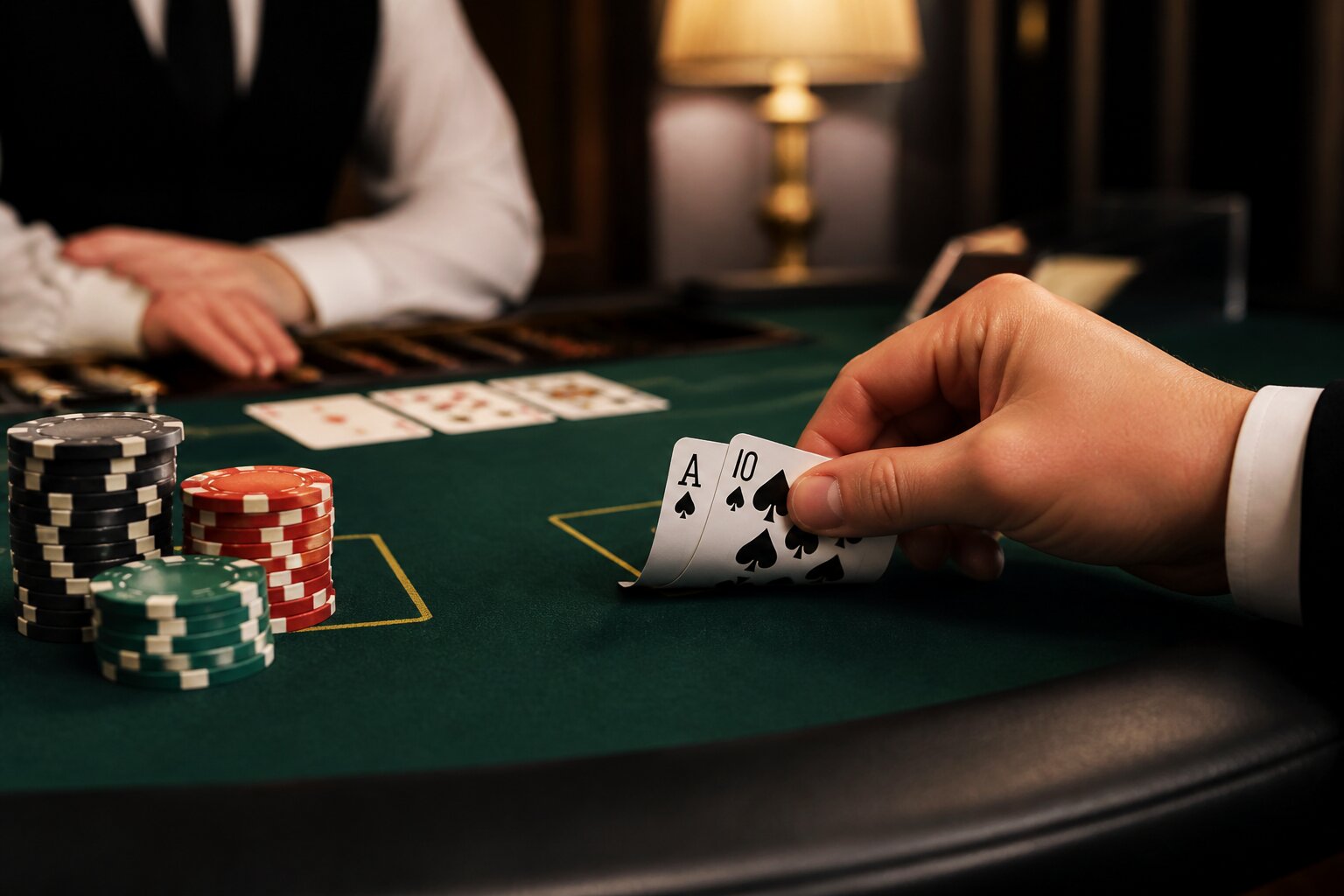
A ‘natural blackjack’ is when your first two cards total 21—an ace and a 10-value card—and it usually pays 3:2. That means a £10 stake returns £25 in total: your £10 stake plus £15 profit. This payout is the most favourable for players and is a major reason table rules matter.
A regular win, where your hand beats the dealer without being a natural, pays 1:1. So a £10 bet returns £20 in total: your stake plus £10 winnings. If your hand and the dealer’s tie, it’s a push and your stake is returned.
Some tables reduce the natural payout to 6:5, which lowers real returns. For example, a £10 stake with a 6:5 payout gives £12 profit rather than £15. Small differences like this change expected returns noticeably over time, so always check the posted payouts before you play.
Understanding How Blackjack Odds Work
Odds in blackjack describe the likelihood of different outcomes: winning, losing, or pushing. These probabilities depend on the rules in force and on how many decks are used. For instance, single-deck games and multi-deck games produce different frequencies of certain hands.
Dealer behaviour—whether they hit or stand on a soft 17, for example—also shifts the odds. Even skillful decisions can’t remove the built-in casino advantage; they only help you play more efficiently within those odds.
Keep in mind that when we talk about odds here, we mean mathematically derived chances based on the game’s structure. These probabilities inform long-term expectations rather than single-hand outcomes.
Why Do Payouts Differ at Various Tables?
Payout differences usually reflect rule variations. A table where the dealer hits on soft 17 or where double-down rules are restricted will often have a slightly higher house advantage. Casinos set these rules to balance player appeal with their own risk.
The number of decks matters too: more decks typically increase the house edge modestly. Side bets and bonus features bring separate payout tables and can look attractive because of their high nominal returns, but those are priced with larger built-in edges.
Before you sit, check the rules and payout schedule. Knowing how these factors interact helps you decide which tables offer the best value for your playing style.
What Is the House Edge in Blackjack?
The house edge is the casino’s expected long-term advantage, expressed as a percentage of total wagers. For blackjack, a well-structured game played with solid decision-making can produce a house edge as low as about 0.5%. Slight rule changes—like a 6:5 blackjack payout or limits on doubling—can push that edge higher.
This percentage isn’t a prediction of short-term results; it indicates the typical return the casino expects across many hands. Understanding the house edge helps you compare different tables and features and make choices that preserve your funds for longer play.
How Do Blackjack Payouts Affect the House Edge?
Payout values, especially for naturals, are one of the most powerful levers on the house edge. A 3:2 natural payout keeps the edge relatively low, while 6:5 dramatically raises it. Other rule tweaks—dealer actions on 17, surrender options, or doubling restrictions—also shift the edge by small but meaningful amounts.
When comparing tables, look first at the natural payout and then at other player-friendly rules. Combined, these details determine how close to break-even a skilled player might get over time.
Blackjack Payouts for Side Bets Explained
Side bets are optional wagers placed alongside your main bet and pay according to specific card combinations or events. Common examples include ‘Perfect Pairs’ (first two cards form a pair) and ‘21+3’ (your two cards plus the dealer’s upcard form a poker hand). These bets can promise high nominal payouts—such as 25:1 for a suited pair—but those large numbers come with larger house edges.
Because side-bet pay tables are designed with bigger margins for the house, they are generally less favourable for consistent returns. Players often use them sparingly for variety rather than as a central strategy. If you enjoy a side bet, treat it as a small, deliberate entertainment expense within your overall stake.
Common Misconceptions About Blackjack Odds
Several persistent myths surround blackjack. One is that tables go through predictable streaks where a player is ‘due’ a win; actually, each deal is independent and governed by the game’s probabilities rather than past outcomes. Another is that any single strategy can guarantee success; while basic strategy reduces the house edge, it does not eliminate it.
Believing in guaranteed systems or ‘due’ outcomes can lead to poor decision-making. A better approach is to understand what the odds imply about expected returns and to play with rules that give the most favourable edge where possible.
Transitioning from these misconceptions, it helps to compare how blackjack stacks up against other games, so you can choose where your time and money are best spent.
How Do Blackjack Payouts Compare to Other Casino Games?
Compared to many slot games, blackjack generally offers a lower house edge when played with good rules and solid decisions. Roulette and baccarat sit somewhere in between depending on bets chosen: roulette’s single-number bet pays 35:1 but carries a low probability of success, while baccarat’s banker and player bets have relatively modest edges.
Each game has different mechanics and payout structures, so “better” depends on whether you value lower house edge, higher volatility, or simply the style of play. Choose games that match the kind of experience you want, and be aware that seeking high payouts usually means accepting larger house margins.
Frequently Asked Questions About Blackjack Returns
Below are clear answers to common questions about blackjack returns. These points summarise the guide’s key ideas so you can refer back quickly.
What does ‘3:2 payout’ mean?
A 3:2 payout means a natural blackjack wins three units for every two staked. A £10 bet would return £25 in total: the original £10 plus £15 winnings.
Can I improve my returns with a certain strategy?
Using basic strategy improves decision-making and lowers the house edge compared with guessing. It does not, however, guarantee wins or change the game’s probabilistic nature.
Is the house edge always the same in every blackjack game?
No. The house edge varies with table rules, number of decks, and payout structures. Look for player-friendly rules to keep the edge as low as possible.
Should I take insurance or side bets?
Insurance is generally unfavourable unless you have specific card-counting information, and most side bets carry higher house edges. Treat these options as optional entertainment rather than reliable ways to increase returns.
What’s the safest way to enjoy blackjack?
Set a budget and stick to it, take breaks, and accept that outcomes are uncertain. These habits help keep play controlled and enjoyable.
**The information provided in this blog is intended for educational purposes and should not be construed as betting advice or a guarantee of success. Always gamble responsibly.