Bingo isn’t just one game — it’s a family of related formats with different ticket layouts, winning patterns and speeds. Whether you’re just curious or thinking of joining a game, knowing the main types helps you pick the one you’ll enjoy most.
This guide walks through the most common bingo styles, explains how they differ, and describes how each one plays out. Read on to find the version that suits you best.
What Are the Main Types of Bingo Games?
Bingo comes in a few recognisable formats, each with its own ticket design and pace. Here’s a clear look at the versions you’re most likely to meet.
90-Ball Bingo
A long-standing format in the UK, 90-ball bingo uses tickets with 15 numbers arranged across three rows. Typical prizes are awarded for completing one line, two lines and a full house.
75-Ball Bingo
Common online and in North America, this uses a 5x5 grid. The centre square is often reserved, and games usually award prizes for completing specified patterns such as a row, column or distinct shape.
80-Ball Bingo
A middle option between 75 and 90, 80-ball bingo uses a 4x4 grid. Rounds are a touch quicker than 90-ball and prizes may be for lines or particular patterns.
30-Ball Bingo (Speed Bingo)
A compact, fast variant played on a 3x3 ticket. Rounds finish quickly, so it’s ideal if you prefer short games with rapid results.
Now that you know the main formats, it helps to see how their ticket layouts and winning rules shape the play.
How Do 90-Ball, 75-Ball & 80-Ball Bingo Differ?
The type of ticket and the winning conditions are what create the distinct feel of each format.
Ticket formats vary: 90-ball tickets have three rows and nine columns with blank spaces; 75-ball uses a 5x5 square grid often with a free centre; 80-ball is a compact 4x4 grid with no blanks. Those differences change how quickly a ticket fills and how many numbers you need to match before a win is possible.
Winning conditions also change the flow. In 90-ball games the usual milestones are a single horizontal line, two lines and a full house. With 75-ball the objective is to complete a pattern that the caller announces before play; that pattern can vary from game to game. 80-ball titles typically reward straights or preset shapes, and because there are fewer numbers on a ticket, rounds tend to be shorter.
These structural differences affect pacing and strategy: buying more tickets increases coverage, but it also means keeping track of more cards. With online tools like auto-daubing (which marks numbers for you) that bookkeeping becomes easier.
Exploring Popular Bingo Variations in the UK
Beyond the core formats, there are many ways operators add variety to keep games fresh and social. These variations change the atmosphere and prize structure without altering the basic idea of matching called numbers.
Themed rooms create a distinct look and feel by using graphics and chat prompts tied to a TV show, holiday or pop-culture topic. Jackpot and progressive games raise the stakes by offering larger prizes when certain conditions are met, sometimes growing the prize pool over multiple games. Special formats such as Deal or No Deal Bingo incorporate a bonus round where winners can reveal extra prizes, while roll-on and linked games either give additional chances after the main prize or combine rooms so larger prize pools are possible.
These variations show how the same core mechanic can be adapted to suit different tastes, from quick sessions to bigger, more competitive occasions. If you enjoy a more social experience, themed and live-hosted games tend to feel friendlier; if you like larger rewards, linked or jackpot formats are where the bigger pots appear.
How Do Online Bingo Games Compare to Traditional Bingo?
Online bingo keeps the essential elements of the hall experience — numbered tickets, a caller and the thrill of completing a winning combination — but adds convenience and a different style of interaction.
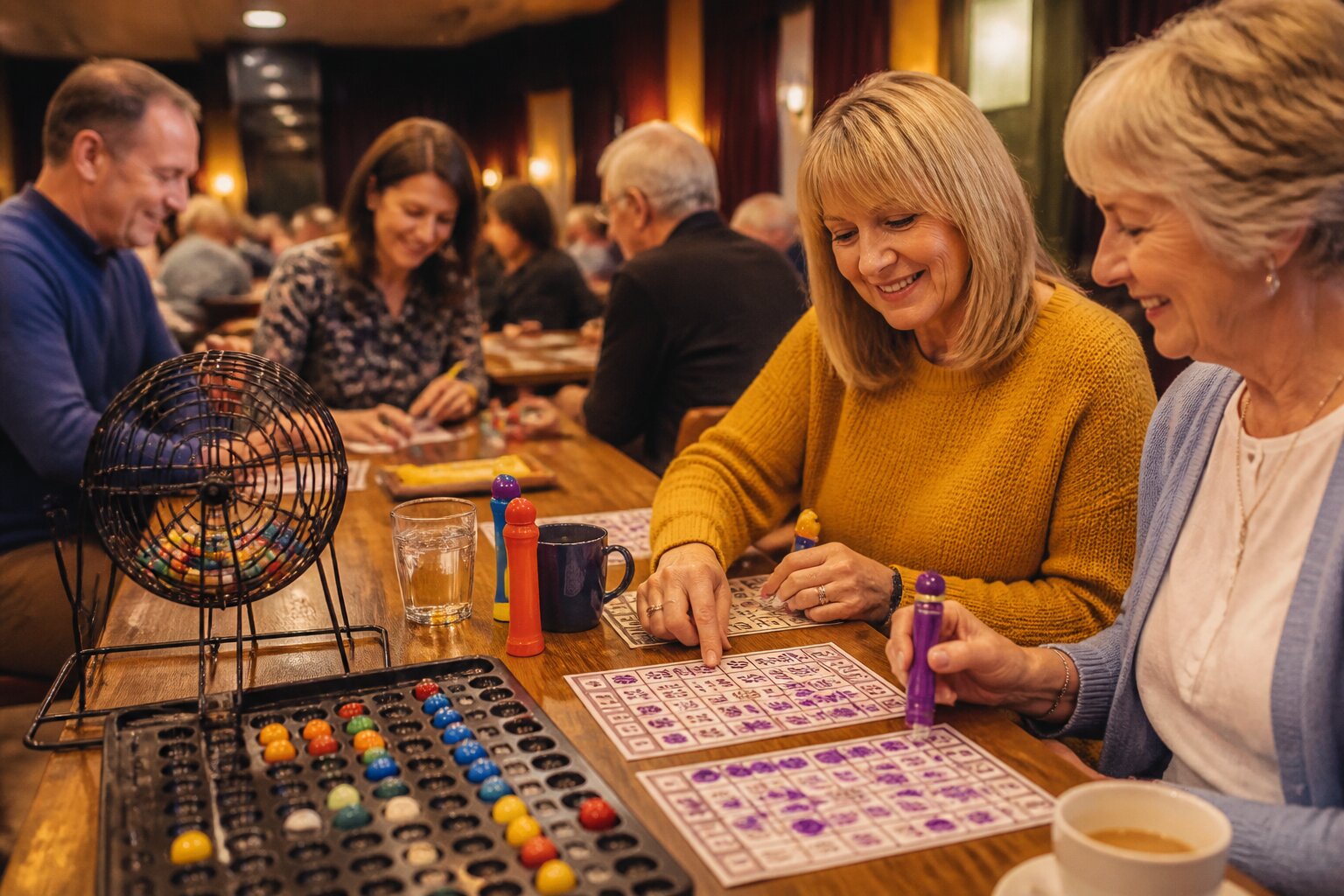
Traditionally, bingo halls offer a communal, in-person atmosphere where players gather, chat and mark cards physically. Online play puts similar rooms on phones and computers, often with extra features such as chat moderation, promotional extras and automated marking. Live online bingo bridges the gap by bringing a real caller on-screen, so players can still hear a human voice and see the host while playing from home.
Both settings have their own appeal. The form you pick often comes down to whether you prefer social contact in person or the accessibility and scheduling flexibility of online play. Do note that all players must be aged 18 or over and should use available tools to control deposits and play time.
Unique Features of Mobile & Live Bingo
Mobile bingo apps often include auto-daubing, push notifications for upcoming games and in-app chat, making it straightforward to join sessions on the go. Live bingo streams a caller and sometimes shows a studio or hall setting, giving a closer approximation of a traditional game while retaining online convenience.
These features change how people engage with bingo rather than the core rules, so the basic experience of listening for numbers and aiming to complete the winning layout remains familiar.
How to Play Each Type of Bingo: Rules & Gameplay
Understanding how a round unfolds helps set expectations, whether you choose 90-, 75-, 80- or 30-ball play. Each format follows the same idea—numbers are called and players mark matching numbers on their tickets—but the rhythm and objectives differ.
90-Ball Bingo
In a 90-ball game, tickets present three rows with a total of fifteen numbers and some empty spaces. A session typically progresses through prizes for one completed horizontal line, then two completed lines, and finally a full house when every number on the ticket has been marked. Because each ticket has multiple rows and blanks, the number of calls required to reach these milestones can vary considerably.
75-Ball Bingo
A 75-ball game uses a 5x5 grid with a variety of patterns set as the target before play begins. Players mark squares as numbers are called and win when they complete the announced shape — that might be a straight line, a corner box, or a more complex design. Pattern bingo keeps individual rounds interesting because the winning shape can change from game to game.
80-Ball Bingo
With a compact 4x4 ticket, 80-ball rounds are brisk. Winning is usually about completing a straight line or a preset pattern. The shorter card size accelerates the pace, so results appear sooner than in 90-ball sessions.
30-Ball Bingo (Speed Bingo)
This uses a small 3x3 ticket and moves quickly. Since there are only 30 numbers in play, games finish in only a few calls and suit players who prefer many short rounds rather than a long session.
General gameplay across formats is supported by online features such as auto-daubing, which helps when managing multiple tickets. The differences lie mainly in ticket layout and the defined target for each round, and those choices determine how long a session will last and how competitive it feels.
Common Bingo Terminology Explained
Knowing a few terms makes it easier to follow a game and join in conversations.
Ticket or card refers to the sheet or grid you play with. Full house means every number on your ticket has been marked — typically the top prize. Line means all numbers across a horizontal row are marked. Caller is the person or automated system announcing numbers. Jackpot denotes a larger prize, often with additional conditions such as being claimed within a set number of calls. Pattern is the specific arrangement you must complete in formats like 75- and 80-ball. Auto-daub is the online feature that marks numbers for you automatically.
These terms describe the basic elements you’ll encounter and help you understand game announcements and prize conditions.
Bingo Game FAQs: What Beginners Want to Know
New players often have similar concerns about skills, multiple tickets and payouts. This section answers those common questions plainly.
Do I Need Any Special Skills to Play Bingo?
No special training is needed. Success depends on the numbers called and how many of your tickets match them, so familiarity with the card layouts and staying attentive to calls makes the experience easier.
Can I Play More Than One Ticket at a Time?
Yes. Many players use multiple tickets to increase coverage of the drawn numbers, and online systems often make this manageable. Bear in mind that more tickets can increase cost and complexity, so consider how many cards you can follow comfortably.
How Are Winnings Paid Out?
In halls, staff handle claims and prize distribution. Online, winnings are generally credited to your account according to the platform’s stated procedures. Checking the terms and payout timelines in advance helps avoid surprises.
What Happens If I Miss a Number Online?
Online platforms commonly offer auto-daubing to mark numbers for you. In a physical hall, keeping a steady rhythm marking your card or using a checklist helps. If you do miss something, staff or the game moderator can explain how any disputes are handled under the venue’s rules.
How Do I Make Sure I’m Playing Responsibly?
Before you start, decide on a budget and stick to it. Use any available tools for deposit limits, time reminders and self-exclusion if you need them. If you ever feel your play is becoming a problem, organisations such as BeGambleAware provide confidential advice and support.
Bingo can be a straightforward, sociable pastime when approached with clear limits and an understanding of how the different formats work. Enjoy the variety on offer and pick the style that fits the way you like to play.
**The information provided in this blog is intended for educational purposes and should not be construed as betting advice or a guarantee of success. Always gamble responsibly.